






Shahid K Abbas
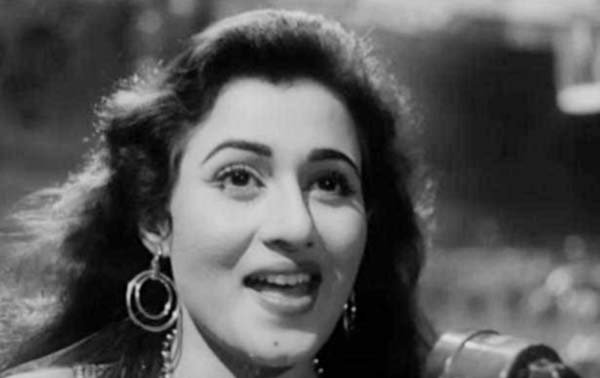
New Delhi, Feb 14 (UNI) Every February 14, when the world pauses to celebrate love, cinema lovers remember a different kind of romance, one born not of fairy tales but of celluloid magic and real-life poignancy. Madhubala, Bollywood’s immortal “Queen of Beauty,” entered this world on Valentine’s Day, a poetic coincidence for a woman whose life and art were inseparable from love itself.
Known for her luminous screen presence and ethereal grace, Madhubala’s stardom was as early as it was meteoric. Beginning her career as Baby Mumtaz, she went on to dazzle audiences and critics alike through the golden era of Hindi film, captivating a generation in roles that ranged from playful charm to tragic elegance.
Much of Madhubala’s enduring aura springs from her peerless performance in Mughal-e-Azam, where she embodied the doomed courtesan Anarkali, pining for her beloved Prince Salim. In that role, art and life converged in an almost poetic symmetry-Anarkali’s yearning eyes and the heartbreak in Madhubala’s own heart echoing through decades of cinema history.
Her Anarkali wasn’t just a character; she became a symbol of undying allure and romantic tragedy, making an indelible mark on Indian film lore that no retrospective can ever fully encapsulate.
If Mughal-e-Azam brought her immortality, her personal life brought narratives that were as romantic- and as heartbreaking-as any of her films. Long before she tied the knot, Madhubala’s most publicized romance was with her Mughal-e-Azam co-star Dilip Kumar- a love affair that became the stuff of legend in its own right.
Yet it was with Kishore Kumar — the beloved singer, actor, and filmmaker — that she stepped into marriage in 1960. The union was as unconventional as it was deeply human. Madhubala, then already battling a congenital heart condition, embraced marriage—even as doctors warned her of a prognosis that would cut her life tragically short.
Their relationship defied labels. Behind the cheerful screen pairings in films like Dhake Ki Malmal, Chalti Ka Naam Gaadi, and Half Ticket, there lay a complex bond shaped as much by tenderness as turmoil. Some accounts from those close to Madhubala suggest moments of emotional distance between them during her illness; others remember Kishore’s deep commitment, choosing to care for her through years that doctors said she might not survive.
Through all of it, their marriage lasted until her last breath — a union marked not only by its affection but by the very human imperfections of two artists living in the public eye.
Perhaps most telling of all is this: the world’s celebration of love on Valentine’s Day also marks the birth of a woman who embodied love in its most dazzling and its most devastating forms. Born on a day dedicated to love, Madhubala’s life would mirror the grandeur of her greatest roles, yet carry in her heart a yearning that scripts alone could never resolve.
She left us too soon, at just 36 years of age, but not before engraving her beauty, talent, and spirit into the heart of cinema itself — forever a timeless muse, forever the queen of beauty.
Remembering Madhubala — with every frame she lit up, every heart she stirred, and every Valentine’s Day that now carries her name in the constellation of cinematic legends.