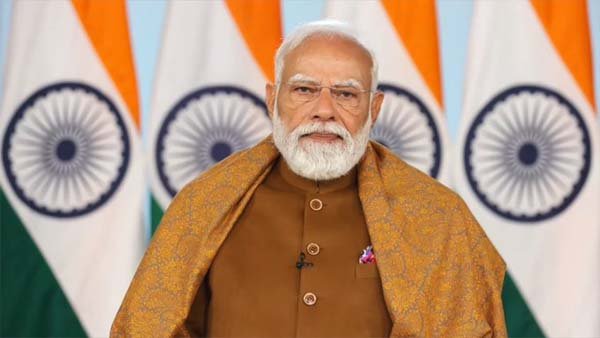






New Delhi, Feb 12 (UNI) Prime Minister Narendra Modi on Thursday hailed the union Budget presented by Finance Minister Nirmala Sitharaman in the Lok Sabha, describing it as a blueprint for India’s “economic transformation” with a strong focus on reforms, small businesses, skilling, infrastructure, healthcare and education.
In a post on social media platform X, the Prime Minister said the Finance Minister had laid out a “comprehensive picture” of how the government’s fiscal roadmap for the year would accelerate growth and strengthen key sectors of the economy.
“In her speech in the Lok Sabha, Finance Minister Smt. Nirmala Sitharaman Ji gave a comprehensive picture of how this year’s Budget will contribute to our nation’s economic transformation,” Modi wrote. “She emphasised on Reform Express, the support to MSMEs, skilling, push to next-gen infrastructure, efforts to boost healthcare, education and more.”
The union Budget, presented on February 1 in Parliament, outlined a series of measures aimed at sustaining India’s growth momentum while deepening structural reforms. According to the Finance Minister’s address, the government’s approach — described as the “Reform Express” — seeks to fast-track policy changes to enhance ease of doing business, attract investment and strengthen domestic manufacturing.
A significant portion of the Budget is dedicated to Micro, Small and Medium Enterprises (MSMEs), a sector that contributes nearly 30 per cent to India’s GDP and employs over 110 million people. Sitharaman announced expanded credit access, simplified compliance mechanisms and targeted incentives to help small businesses scale up and integrate into global supply chains.
“Our MSMEs are the backbone of India’s growth story,” the Finance Minister said during her reply to the debate on the Budget. “This Budget ensures they receive the financial and policy support needed to innovate, expand and create jobs.”
Skilling and employment generation also featured prominently. The government proposed new initiatives aimed at aligning workforce capabilities with emerging industries, including green energy, advanced manufacturing and digital technologies. Enhanced partnerships between industry and educational institutions are expected to form a key part of this effort.
The Budget further underscores a push toward next-generation infrastructure, including investments in digital connectivity, renewable energy corridors, logistics networks and urban development. Officials say these initiatives are designed to lower costs, improve productivity and prepare India for long-term competitiveness.
Healthcare and education were also highlighted as priority areas. Increased allocations and reforms are intended to expand access, improve quality and strengthen public institutions, particularly in underserved regions.
Economic analysts note that the Budget comes at a time when India is seeking to consolidate its position as one of the world’s fastest-growing major economies, amid global uncertainties and shifting supply chains. The government has repeatedly emphasised fiscal prudence alongside growth-oriented spending.
Budget FY27 sets course for ‘economic transformation,’ says PM Modi