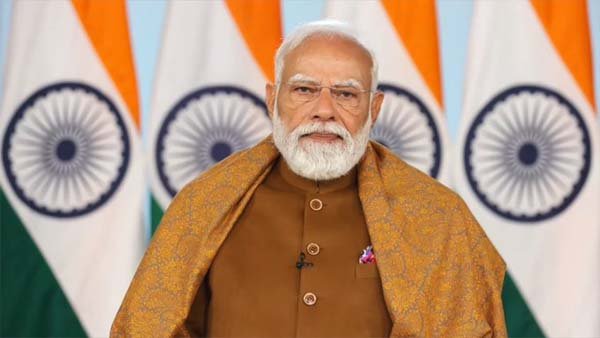



New Delhi, Feb 9 (UNI) In the second episode of Pariksha Pe Charcha 2026, Prime Minister Narendra Modi connected with students from diverse regions including Coimbatore, Raipur, Devmogra, and Guwahati, continuing his signature interactive dialogue aimed at easing exam pressure and inspiring the youth. The special edition of PPC this year spanned multiple locations across India, reflecting the vast diversity and spirit of the nation.
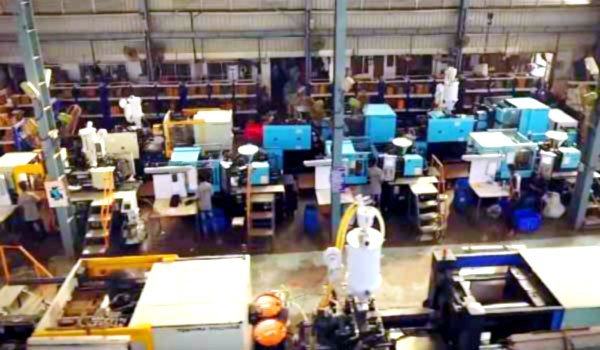
Opening the session in Coimbatore, the Prime Minister greeted students with a warm “Vanakkam,” and emphasised the importance of blending education with passion and creativity. “Don’t see studies and art as separate,” he said, encouraging students to use art to relieve stress and fatigue from studies. He urged youth to reach out to industry professionals to understand how work happens in real-world settings, highlighting the value of exploring startups and innovation from an early age.
On the topic of India’s development by 2047, the Prime Minister highlighted that every citizen’s small actions build the nation’s progress. “Don’t throw garbage or spit on the roads, stop at red lights, and don’t waste food,” he urged, underscoring that discipline is key to development. He encouraged students to be “vocal for local” by supporting indigenous products and celebrating events within the country.
“Discipline is the key, inspiration only adds on to it,” Modi remarked, illustrating that motivation without consistent effort is insufficient. He cautioned against becoming slaves to technology but encouraged embracing it as a powerful teacher that can enhance learning and work.
Responding to concerns about balancing academics with personal interests, the Prime Minister reassured students that both are complementary. He advised dedicating time regularly to hobbies and sports as they help maintain balance and build resilience. “It is important to make sports a part of life,” he said, stressing that being strong academically and physically leads to holistic development.
He also recommended practical study techniques, such as practicing by writing rather than mere reading and helping peers who struggle with studies to reinforce learning.
Modi encouraged young leaders to develop fearlessness and take initiatives. “A good leader should communicate ideas clearly and effectively,” he explained, emphasising that leadership is about inspiring others through action and understanding.
On environmental care, the Prime Minister reminded students of their responsibility toward natural resources, sharing stories of simple yet impactful initiatives like conserving water and using organic waste for plants. He linked these actions to the broader vision of a sustainable and developed India.
In Raipur, the Prime Minister engaged with students over local culture and cuisine, encouraging travel as a means to understand India’s rich diversity “like a student.” He shared tips on managing exam stress and the importance of sleep and laughter for mental well-being.
At Devmogra, Gujarat, Modi lauded tribal students’ talent and art forms such as Warli and Pithora. He spoke about the development of tribal areas through education and infrastructure, highlighting the role of tribal communities in India’s progress. He also recounted personal anecdotes about his teachers and the formative role they played in his life.
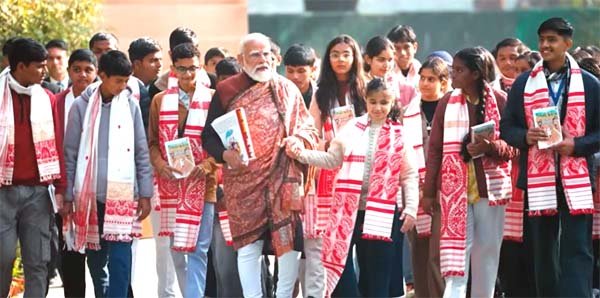
In Guwahati, amidst the scenic Brahmaputra, the Prime Minister received a traditional gamosa and interacted warmly with students. He reflected on the importance of self-confidence and advised students to view exams as opportunities rather than sources of fear. Sharing a personal take on diet and lifestyle, he emphasised simplicity and prioritising health and mindfulness.
Throughout these varied interactions, PM Modi’s message remained consistent: exams are part of life’s journey, and with discipline, self-belief, and a supportive environment, students can overcome challenges and contribute meaningfully to the nation. Students expressed their gratitude and excitement, many describing the Prime Minister as a family member and friend rather than a distant leader.
Concluding the session, the Prime Minister reiterated, “Every small step will build Viksit Bharat @2047,” inspiring youth to carry forward the vision of a developed, disciplined, and inclusive India.