






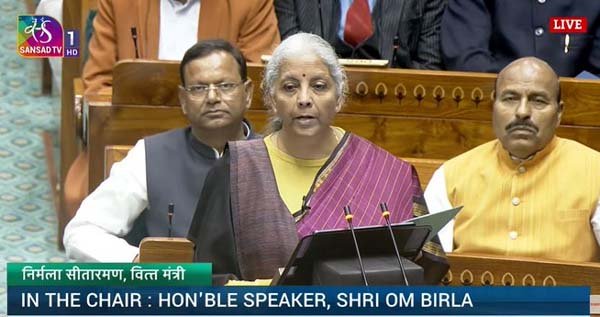
New Delhi, Feb 1 (UNI) In a bid to deepen India’s manufacturing base in strategic and frontier sectors, union Finance Minister Nirmala Sitharaman on Sunday announced a clutch of initiatives, to strengthen domestic capabilities across pharmaceuticals, semiconductors, electronics, critical minerals and chemicals, as part of what she called her government’s ‘Reforms Express.’
Presenting the union Budget 2026-27, the Finance Minister said the government will launch Biopharma Shakti, a new programme designed to bolster India’s position in advanced biopharmaceutical manufacturing and innovation.
The initiative is expected to support research, scale-up of production, and integration of Indian firms into global value chains in high-end biologics and medical products.
To accelerate India’s ambitions in chip-making, Sitharaman proposed the rollout of India Semiconductor Mission (ISM) 2.0, building on the existing mission to expand fabrication, packaging, testing and design capacities.
The upgraded mission aims to attract larger investments, promote technology partnerships and create a more comprehensive semiconductor ecosystem within the country.
The Budget also announced an Electronics Components Manufacturing Scheme to encourage domestic production of key components, a segment where India continues to rely heavily on imports. Officials said the scheme will focus on increasing value addition, improving supply-chain resilience and supporting the fast-growing electronics and consumer device industry.
Recognising the strategic importance of critical minerals, the Finance Minister proposed the establishment of dedicated Rare Earth Corridors in Odisha, Kerala, Andhra Pradesh and Tamil Nadu.
These corridors are intended to support mining, processing and downstream manufacturing of rare earth elements, which are essential for electric vehicles, renewable energy technologies, defence systems and electronics.
In the chemicals sector, the government plans to set up three dedicated Chemical Parks to provide world-class infrastructure, common utilities and environmental management facilities, helping reduce costs and improve competitiveness for domestic manufacturers. Sitharaman further announced a scheme to revive 200 legacy industrial clusters across the country.
The programme will focus on modernising infrastructure, upgrading technology, improving access to finance and skilling workers, with the objective of rejuvenating traditional manufacturing hubs and boosting employment.
Together, the measures underscore the government’s push to make India a global manufacturing hub in high-value and strategically sensitive sectors, while strengthening supply chains and supporting long-term economic growth.