





Pankaj Jain,
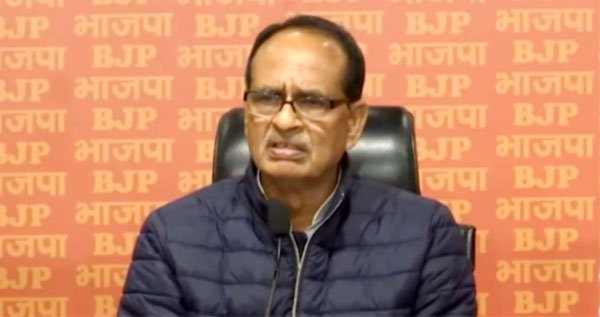
New Delhi, Jan 16 (UNI) union Minister for Agriculture and Farmers’ Welfare and Rural Development, Shivraj Singh Chouhan, on Friday provided detailed information on the proposed Seed Act, 2026, describing it as a historic and farmer-centric reform aimed at ensuring seed quality, transparency and protection of farmers’ interests.
Addressing the media, the Minister said the new law has been designed to put a complete check on the menace of spurious and substandard seeds while strengthening accountability across the seed supply chain.
Chouhan said a comprehensive traceability mechanism will be introduced under the new Act, enabling farmers to know the complete journey of the seed from production to sale.
“Every seed will carry a QR code. Once scanned, a farmer will be able to see where the seed was produced, which dealer supplied it and who sold it,” he said, adding that this system will ensure immediate identification of fake or poor-quality seeds and fix responsibility without delay.
He asserted that once traceability is fully implemented, substandard seeds will either not enter the system at all or will be promptly detected and penalised.
Under the proposed law, registration of all seed companies will be made mandatory. “Only authorised and registered companies will be allowed to sell seeds. No unauthorised vendor will be permitted to operate in the market,” Chouhan said.
This will eliminate fake companies and ensure that farmers receive seeds only from verified sources. he noted
Highlighting the punitive provisions, the Agriculture Minister said the existing nominal penalty of Rs. 500 will be replaced with much stricter measures.
“There is a proposal to impose fines of up to Rs. 30 lakh on those selling inferior or fake seeds. In cases of deliberate wrongdoing, provisions for imprisonment of up to three years have also been included,” he said, adding that honest companies need not fear, but those cheating farmers will face strict action.
Dispelling concerns that the new law could restrict farmers’ traditional practices, Chouhan clarified that there will be no ban on farmers using or exchanging their own seeds. “Farmers can continue to sow their own seeds and exchange seeds among themselves, as is traditionally done in villages. This age-old system will remain fully protected,” he said.
He further said the Act provides a balanced framework covering the public sector (including ICAR, agricultural universities and Krishi Vigyan Kendras), quality indigenous private companies, and foreign seeds.
“Foreign seeds will be allowed only after thorough testing and evaluation. Our public institutions and domestic seed companies will be strengthened to ensure farmers get high-quality seeds at fair prices,” he added.
Emphasising the importance of sensitisation of farmers, Chouhan said the government has launched initiatives such as the ‘Viksit Krishi Sankalp Abhiyan’ to educate farmers about seed quality, selection and grievance redressal. All 731 Krishi Vigyan Kendras across the country will play a key role in spreading awareness at the grassroots level.
Minister said the existing Seed Act of 1966 is outdated and does not reflect modern technological and digital realities.
“At that time, there was no digital data or traceability. The Seed Act, 2026 is a modern, technology-driven law based on transparency, digital records and accountability, so that no farmer is cheated in the future,” he said.
Responding to concerns about federal powers, Chouhan clarified that agriculture remains a state subject. “The rights of state governments will remain unchanged. The Centre will only coordinate and the law will be implemented in cooperation with the states,” he said.
The Agriculture Minister stated that the core objective of the Seed Act, 2026 is to ensure that every farmer gets access to safe, reliable and high-quality seeds.
“Good companies will be encouraged, and those who deceive farmers will be punished. This Act is a decisive step towards protecting farmers and strengthening Indian agriculture,” he said.