





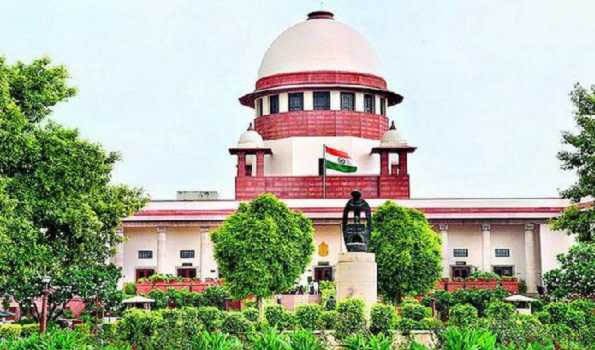
New Delhi, Jan 15 (UNI) The Supreme Court on Thursday reserved its judgment on a plea seeking withdrawal of life-sustaining treatment for a 32-year-old man who has remained in an irreversible permanent vegetative state for nearly 12 years following a fall from a building.
A Bench comprising Justice J.B. Pardiwala and Justice K.V. Viswanathan was hearing a miscellaneous application filed by the man’s father seeking permission to discontinue all life-sustaining treatment.
Two medical boards constituted pursuant to the Court’s directions have reported that the patient has no chance of recovery.
The Court noted that under the guidelines laid down by the Constitution Bench in Common Cause v. union of India (2018), as modified by a subsequent order in January 2023 recognising the right to die with dignity, opinions of the primary and secondary medical boards are required before such a request can be considered.
It was pointed out that if allowed, this would be the first case where the Common Cause directions are judicially applied.
Advocate Rashmi Nandakumar, appearing for the petitioner, traced the evolution of jurisprudence on the right to die with dignity, referring to Gian Kaur, Aruna Shanbaug, and Common Cause, wherein the Supreme Court recognised that the right to life under Article 21 includes the right to die with dignity.
She submitted that once the primary and secondary medical boards return consistent opinions, the process envisaged under Common Cause stands completed, and recourse to the High Court arises only in cases of conflicting medical opinions.
Nandakumar also suggested that hospitals should maintain a panel of doctors from which Chief Medical Officers could nominate members for medical boards, given the time-sensitive nature of such cases.
She submitted that several States, including Goa, Maharashtra, and Karnataka, have already constituted such medical boards.
The petitioner sought withdrawal of clinically assisted nutrition and hydration in accordance with palliative care protocols and under medical supervision at the Institute of Human Behaviour and Allied Sciences, Government of NCT of Delhi.
Submitting that the patient’s condition has not improved since the initial injury, Nandakumar stated that the family had taken care of him for over a decade and was acting in his best interests.
Justice Pardiwala queried an earlier observation of the Delhi High Court that the patient was not being kept alive mechanically and was able to sustain himself.
In response, Nandakumar argued that the observation was incorrect and not based on any medical determination.
Additional Solicitor General Aishwarya Bhati, appearing for the Union, concurred that the patient is in a permanent vegetative state with no chance of recovery.
She informed the Court that there appeared to be no reported judgment where the Common Cause directions had been applied in practice.
Bhati emphasised that the considered views of caregivers must also be accorded due weight.
On the suggestion regarding permanent medical boards in hospitals, Bhati submitted that Primary and Secondary Medical Boards are required to be constituted on a case-by-case basis.
She further argued that while omission is permissible in cases of passive euthanasia, it should not be the cause of death, which must result from the underlying medical condition.
Drawing a comparison with the Aruna Shanbaug case, Bhati pointed out that, unlike the present case, the nursing staff in that matter had opposed withdrawal of medical support and that Shanbaug had shown minimal responses, unlike the patient in the present case.
Following the hearing, Justice Pardiwala thanked both counsel for their assistance and orally observed that the issue was extremely delicate, often presenting a moral dilemma as to whether such decisions can be taken by mortals.
The Court noted that the Primary Medical Board had reported negligible chances of recovery, stating that the patient has been bedridden with a tracheostomy tube for respiration and a gastrostomy for feeding, and has developed severe bedsores.
A Secondary Medical Board constituted by the All India Institute of Medical Sciences (AIIMS) also examined the case.
After perusing the report, Justice Pardiwala described it as “sad” and observed that the man could not continue to live in such a condition.
The Court also interacted with the parents before reserving its verdict.
The application has been filed by the father, who had earlier approached the Supreme Court in 2024 seeking the constitution of a primary medical board after the Delhi High Court declined relief.
While the Court had earlier refused to grant the plea, it had, at that stage, prompted the State of Uttar Pradesh to ensure continued medical care.
The present application was moved subsequently, stating that the patient’s condition had further deteriorated and that he was no longer responding to treatment.