




Jayanta Roy Chowdhury & Arti Bali
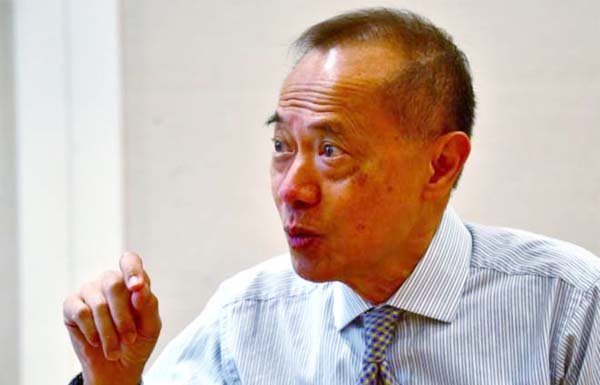
New Delhi, Jan 12 (UNI): Former Singapore Foreign Minister George Yong-Boon Yeo has argued that India’s best long-term strategy in South Asia lies in restraint, regional accommodation, and preventing external powers from exploiting internal divisions.
In an exclusive interview with UNI, Yeo said South Asia’s political borders often mask far older social and cultural continuities.
Recalling a visit to Bangladesh two years ago, he noted how people from West Bengal and Bangladesh communicated effortlessly in Bengali, underscoring what he described as the “artificial nature” of many post-Partition boundaries.
“The division between Bengal and Bangladesh is artificial, just as the division between the two Punjabs is,” Yeo said, adding, “These borders did not erase shared histories or emotional ties.”
However, he acknowledged that there is no easy solution to the accumulated burden of mistrust within the South Asian region.
According to Yeo, who is in the Indian capital to deliver the prestigious C D Deshmukh Lecture organised by the India International Centre, these unresolved internal tensions make the region vulnerable to external interference.
Major powers, he said, could exploit South Asia’s divisions to create deeper ruptures. “That is why it is in India’s best interest to keep tensions low and make the Westphalian system work in its neighbourhood,” he said, adding that instability in the region ultimately constrains India’s strategic autonomy.
The Westphalian order refers to a 17th-century treaty among European powers that established a modern system of sovereign states based on sovereignty, mutual recognition, and interdependence, ending centuries of conflict.
He observed that China’s approach over the past two decades has been to prevent India–Pakistan relations from spiralling out of control. “Whenever Chinese leaders visited Pakistan, they also visited India. Beijing has generally sought balance,” Yeo noted, pointing out that China has remained publicly silent following the most recent India–Pakistan clash.
On the issue of Islamic radicalisation in the subcontinent and West Asia, Yeo said the region had experienced a significant wave but suggested it may have reached its peak.
He argued that extremist movements were not purely organic but were “deliberately fostered” during earlier geopolitical phases through a combination of American strategic objectives, Pakistani facilitation, and Saudi funding.
“We see the footprints of big powers in the rise of ISIS and Al-Qaeda,” he said. “But the situation has changed.”
Yeo pointed to shifts in the Middle East, including Saudi Arabia and the UAE now viewing extremism as a direct threat to their own stability.
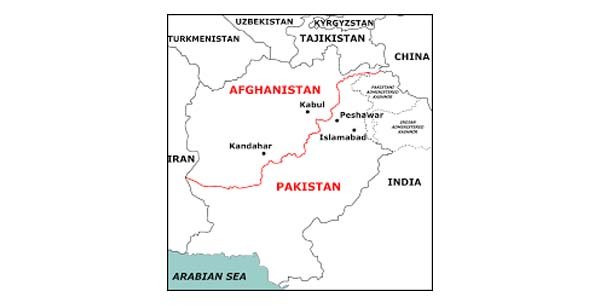
In Afghanistan, he said, the Taliban’s return had paradoxically produced a degree of moderation driven by necessity rather than ideology. “Extremism will take time to subside, but the crest is over,” he added.
Turning specifically to Bangladesh, Yeo cautioned against alarmist assumptions about radicalisation.
“Bengalis have a long intellectual and philosophical tradition. They are not a people inclined towards immoderation,” he said. He stressed that Bangladesh’s economic success rests heavily on women’s participation in the workforce, making prolonged instability unlikely. “It is difficult to imagine women supporting forces that threaten economic progress.”
On Iran, which has been experiencing street protests against the current regime, Yeo emphasised the need to view the country through a civilisational lens. “Iran is an ancient people with a very intellectual form of Islam,” he said.
While acknowledging widespread frustration over political rigidities and economic mismanagement, he argued that unrest in Iran cannot be separated from sustained external pressure.
“There is US and Israeli involvement, through social media, through agencies, which overlays internal dissatisfaction,” Yeo said. He noted that the presence of the son of the former Shah of Iran in exile reflected a symbolic search for alternatives rather than a clear political roadmap.
Asked whether the current unrest could overturn the Islamic Republic, Yeo urged caution. “Iran has a deep sense of itself. Even if there is regime change, it will not be simple to create societal disbalance,” he said, while acknowledging that periods of transition always carry risks.
Summing up, Yeo argued that both South Asia and West Asia are shaped less by short-term political shocks than by long historical and civilisational continuities.