





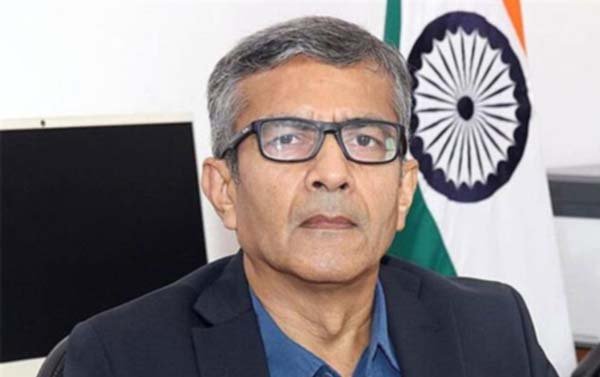
New Delhi, Jan 10 (UNI) Defence Secretary Rajesh Kumar Singh on Saturday said that India is at a decisive moment in its defence and industrial journey, where self-reliance has emerged as a national imperative. He was speaking at the inauguration of Defence Skilling Conclave on Defence, Aerospace and Strategic Sector Skill Development in Chandigarh.
Highlighting the transformation of India’s defence industrial ecosystem over the past decade, he stated that guided by the vision of Aatmanirbhar Bharat, the sector has moved from import dependence to a vibrant ecosystem comprising Defence Public Sector Undertakings (DPSUs), private industry, MSMEs and start-ups.
The Defence Secretary stressed that concerted efforts towards Ease of Doing Business and continued policy reforms have catalysed an indigenous manufacturing surge, encouraging domestic design and production of platforms ranging from UAVs and sensors to complex systems like Artillery Guns, Armoured Vehicles, and Missiles.
He noted that over 788 industrial licenses have been issued to 462 companies, significantly boosting private sector participation, while defence exports have crossed Rs 23,162 crore in 2025, reflecting a nearly 35-fold increase since 2014.
The defence secretary described indigenous platforms such as the Light Combat Aircraft Tejas, Astra Beyond Visual Range Missile, Dhanush artillery guns and INS Vikrant as shining examples of the growing synergy among the industry, research, and skilled manpower.
He reiterated that Aatmanirbharta in defence is not merely an economic objective, but a necessity aimed at achieving long-term strategic autonomy, adding that evolving global supply chains and rapidly advancing technologies present both challenges and unprecedented opportunities for India’s defence sector.
Emphasising the importance of human capital, the Defence Secretary stated that true strategic autonomy requires not only indigenisation of hardware but also sovereignty over skills, technology, and intellectual capital. He highlighted the Government of India’s efforts under the Skill India Mission, with agencies such as the National Skill Development Corporation and the Directorate General of Training, mapping existing capabilities and future skill requirements for the defence and aerospace sectors.
Highlighting the crucial role being played by Agniveers, Singh asserted that the Agnipath scheme has created a pool of disciplined and technically trained youth who can be seamlessly integrated into defence manufacturing and strategic sectors through the National Skill Qualification Framework-aligned skill certification.
The conclave has been organised by the Government of Punjab in collaboration with the Society of Indian Defence Manufacturers (SIDM) and the Confederation of Indian Industry.