




New Delhi, Jan 9 (UNI) India on Friday strongly rejected “Chinese infrastructure projects” in the Shaksgam Valley, asserting that the region is an integral part of its territory and condemning any attempts to alter the ground reality.
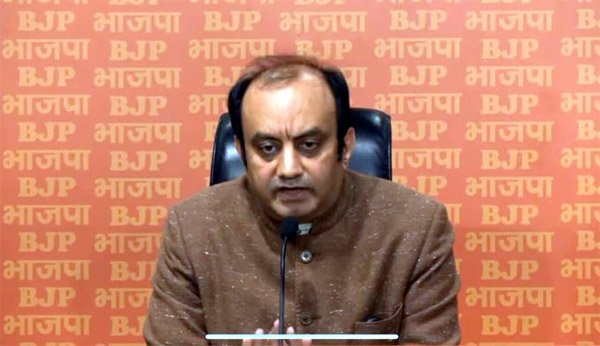
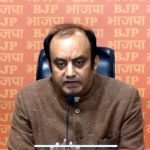
India’s spokesperson Randhir Jaiswal, who came out with the statement against China’s road building in the high Himalayas, also slammed New York Mayor Zohran Mamdani for his letter to jailed Indian student activist Umar Khalid, stating it would be better if he focuses instead on his responsibilities as Mayor of the “Big Apple” .
He also reiterated that India’s energy decisions are guided by the need to secure ‘affordable energy’ for its 1.4 billion people, while responding to a proposed bill in the United States Congress seeking to impose a 500 per cent duty on countries that continue to purchase Russian oil.
The Ministry of External Affairs (MEA) emphasised that projects under the China-Pakistan Economic Corridor (CPEC) passing through the Shaksgam area are “illegal”, reiterating India’s consistent stance on “sovereignty and territorial integrity”. MEA reaction comes after reports emerged that China has constructed a road across the Aghil Pass, at an altitude of 4,805 m, reaching the lower Shaksgam Valley.
Shaksgam Valley, which was originally part of the broader Hunza-Gilgit region, served as a traditional frontier of princely Kashmir. Pakistan seized it from the Maharaja of Kashmir, but the region along with the entire princely state was transferred to India through a treaty by Maharaja Hari Singh. Pakistan later transferred this territory to China through a pact in 1963, which India has consistently held to be illegal.
MEA spokesperson Jaiswal said, “Chinese infrastructure build-up via CPEC in the Shaksgam Valley, which is Indian territory. We have never recognised the so-called China-Pakistan boundary agreement of 1963. We have consistently maintained that the agreement is illegal and invalid.”
He added, “We do not recognise the so-called China-Pakistan Economic Corridor either, which passes through Indian territory, currently under forcible and illegal occupation by Pakistan.”
Jaiswal on Friday stressed, “The entire union Territories of J&K and Ladakh are an integral and inalienable part of India,” implicitly stating that the Shaksgam Valley too was part of India.
He also said this has been clearly conveyed to the” Chinese and Pakistani authorities” several times. “We have consistently protested with the Chinese side for its attempts to alter the ground reality in the Shaksgam Valley. We further reserve the right to take necessary measures to safeguard our interests,” MEA said in a statement.
Jaiswal, in his first media briefing of the new year, asked to comment on Mamdani’s letter to Umar Khalid, also said, “We expect public representatives to be respectful of the independence of judiciary in other democracies. Expressing personal prejudices do not behove those in office.”
Hitting out at the Indian origin mayor, he said, “It would be better to focus on the responsibilities entrusted to them.”
Mamdani, 34, is the first Muslim and first Indian-origin Mayor of New York, America’s largest city. His mother is the well-known filmmaker Mira Nair, and his father is an academic, Mahmood Mamdani, of Ugandan-Indian Gujarati background.
Mamdani, had written a personal letter to former JNU student and activist Umar Khalid, who is currently lodged in Delhi’s Tihar Jail under the Unlawful Activities (Prevention) Act (UAPA) since 2020.
In the letter, Mamdani wrote, “I think of your words on bitterness often, and the importance of not letting it consume oneself.”
Mamdani’s handwritten letter to Umar Khalid coincided with eight US Democratic lawmakers writing to Indian Ambassador Vinay Kwatra on December 30, 2025, urging that Khalid be granted bail and a “fair, timely trial in accordance with international law.”
Jaiswal on Friday also responded to news that the US Congress will next week take up a bill which could impose a 500 per cent duty on countries that continue to purchase Russian oil, stating that India’s energy decisions are guided by the need to secure ‘affordable energy’ for its 1.4 billion people.
“We are aware of the proposed bill. We are closely focused on the developments,” Jaiswal said at the weekly media briefing held here today.
Reaffirming India’s long-standing position, he underlined that energy sourcing decisions are driven by energy security considerations and global market realities.
“Our position and approach on the larger question of energy sourcing is well known. In this endeavour, we are guided by the evolving dynamics of the global market and by the imperative to secure affordable energy for our 1.4 billion people through diverse sources to meet the energy security needs,” he said.
The MEA’s response comes days after US Senator Lindsey Graham said President Donald Trump had given a green light to a bipartisan Russia sanctions bill, which he said would provide leverage against countries such as India, China and Brazil that continue to buy Russian oil.
Trump has in the past linked sanctions and trade policy to Russia’s energy exports, and slapped a 50 per cent tariff on many Indian exports, blaming India for fuelling the Russo-Ukrainian war by buying oil from Moscow.