





Chennai, Jan 6 (UNI) As the Indian Space Research Organisation (ISRO) moves closer to finalising the design of its Next Generation Launch Vehicle (NGLV), unofficially known as Soorya, space sector experts believe it is the right time to involve industry partners at the design stage itself to enable smooth serial production later.
Experts caution that bringing industry into the picture only after the rocket is developed can create manufacturing and scaling challenges.
Selecting industry partners during the design phase, they argue, would ensure that production requirements are built into the system from the outset.
Mukund K. Rao, Space Sector Consultant and former Deputy Director (Technology & Systems), ISRO said there is a fundamental difference between developing a new space system and mass-producing it. While development demands continuous research and technology innovation, production requires standardised designs and robust manufacturing processes.
“ISRO should associate a few committed industry partners during the design and development stage itself,” Rao said.
“This ensures that production strategy and manufacturing capabilities are integrated early, avoiding constraints when scaling up later.”
Embedding manufacturing considerations from the start would allow design corrections, testing, validation, and process optimisation to be addressed in one integrated cycle, Rao added, helping India better serve global market demands.
Rajeev Gambhir, Deputy Director General of the Satcom Industry Association-India (SIA-India), clarified that the proposal does not seek to alter ISRO’s development model. “The idea is to ensure that once development succeeds, the country is institutionally prepared to scale, sustain operations, and collaborate without losing momentum,” he said.
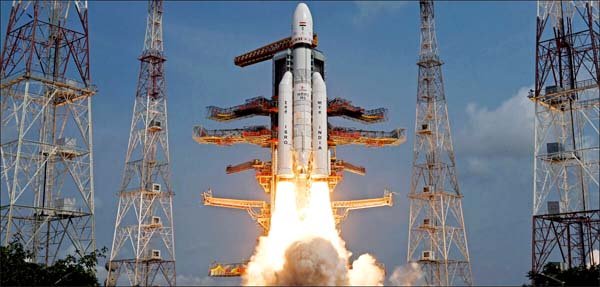
ISRO plans to develop at least two versions of the Soorya rocket: a core-only version without strap-on boosters and a full configuration with two strap-on motors. Both variants are expected to be around 105 metres tall with a diameter of 6.5 metres, though these specifications may change. The configuration is currently under review by a committee formed by ISRO Chairman Dr V. Narayanan.
Rao noted that ISRO’s traditional approach of developing multiple variants—adopted during the early PSLV, INSAT, and IRS programmes in the 1980s and 1990s—was suitable for a research-driven phase but is less compatible with today’s industrial-scale production needs.
“In 2025 and beyond, frequent design changes disrupt production lines and make commercial manufacturing unviable,” Rao said, pointing out that industries cannot constantly retool machinery, casting processes, electronics, and subsystems without affecting business viability.
He also highlighted India’s limited ability to mass-produce satellites and launch systems at scale, contrasting it with the US and China, which manufacture hundreds of space systems annually by involving industry partners from the design stage itself.
While India has made strong progress in developing space technologies, Rao said it continues to lag in large-scale industrial production and privatisation of space manufacturing—an issue that could affect competitiveness in the long term.
The Indian government has previously stated that the NGLV project will be implemented with maximum industry participation, including upfront investment in manufacturing capacity, to ensure a seamless transition from development to operations.
The Soorya rocket is expected to play a key role in India’s future space ambitions, including human spaceflight missions, the Bharatiya Antariksh Station (BAS), lunar and interplanetary exploration, and the launch of large communication and Earth observation satellite constellations into low Earth orbit.