





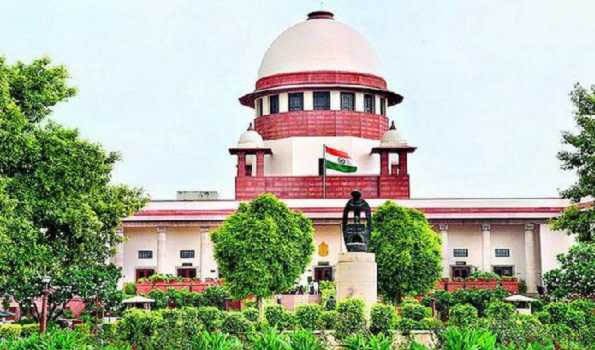
New Delhi, Dec 30 (UNI) Year 2025 came to a close with the Supreme Court making some landmark judgements on environment as the definition of Aravallis and giving free hand to authorities to impound vehicles below BS-4 pollution clearance, which were contributing to most dangerous levels of pollution the people of Delhi ever saw.
On other hand, the Law Ministry consigned some 50 outdated laws to history, giving way to much smoother everyday legal administration. The Ministry also made some laudable efforts to reduce pendency by fast-tracking alternate dispute resolution fora.
The Ministry this year also chose to be kinder to the judiciary by winding up loads of pending cases filed by the very government itself. The Government is the biggest litigant in the courts.
In the matter concerning the Aravallis, the SC took heed to environmentalists raising hue and cry on what they saw Government cleverly tweaking rules to let more mining companies ply their drilling machines in the laps of the mountain range. The court reversed its own order that had accepted the earlier committee report. It brushed aside the argument that low elevation hills necessarily mean it doesn’t come in the ambit environmental protection that high mountains need. The SC said it will be making its own committee of domain experts.
Facing criticism from all directions for not being able to do anything about the miasma of pollution that left Delhiites shocked, desperate and breathless, Delhi government pleaded SC to lift its bar on the persecution of vehicles below BS-4 plying on the roads. The SC gave its nod.
In a similar matter, SC refrained from imposing a complete ban on firecrackers but permitted limited use of certified green firecrackers during specified hours on Diwali.
Infamous Nithari scandal took another anticlimactic turn with SC acquitting the prime accused Surender Koli for want of any credible link to the murder and alleged child cannibalism. Earlier, co-accused Moninder Pandher was also acquitted, drawing protests from a section of people who firmly believed both were the perpetrators of the crime. A nettlesome case of Executive vs Judiciary came before the Apex court in which the moot point was whether a court can order a Governor to decide on passing a bill, which in his executive wisdom needs to be kept in abeyance. The matter was also agitated by the way of Presidential Reference on Articles 200 and 201 where the highest office sought opinion from the apex court.
The President wanted to know whether courts can prescribe timelines for Governors and the President to grant assent to bills. The Supreme Court ruled that while constitutional authorities must act reasonably, courts cannot impose timelines. The SC also held that a Governor does not have an absolute veto and cannot indefinitely delay assent to Bills. The judgment reaffirmed the separation of powers and Constitutional balance.
The running battle between families of victims bitten or mauled by street dogs and the “dog lovers” reached the Supreme Court. The SC examined safety concerns arising from stray dog attacks at schools, hospitals and public places. The Court directed relocation of stray dogs to dog shelters, along with sterilisation and vaccination. Dog lovers found themselves on a back foot when the Court asked why they could not adopt them if they were so concerned.
In the matter related to Waqf board, the constitutional validity of certain provisions of the Waqf Amendment Act, 2025, was challenged, alleging excessive state control over religious endowments. The Supreme Court stayed the operation of selected provisions while allowing the remainder of the Act to function, signaling serious constitutional scrutiny without halting legislative reform entirely.
In 2025, the Ministry of Law and Justice took some decisions of far-reaching nature, easing common man’s access to justice and the ability of the judiciary to dispense justice more expediently.
The Ministry initiated a large-scale review of pending cases involving government departments and public sector undertakings. The move was aimed at shedding the government’s image as the largest litigant and reducing judicial backlog. The Ministry also organised nationwide Lok Adalats to take some pendency load from courts.
At Parliament, the Ministry pushed a legislation repealing numerous obsolete and redundant laws, freeing a significant judicial bandwidth for shorter turnaround in the disposal of cases. This major statutory clean-up to simplify India’s legal framework and remove colonial-era enactments was hailed by the judiciary and the litigants alike.
The Ministry ushered insurance law reforms through the Sabka Bima Sabki Raksha Act for allowing higher foreign investment and strengthening regulatory oversight. This reform impacted financial markets, insurance penetration and foreign investment policy.
Towards the end of year, the Government updated India’s nuclear legal regime in line with energy security and climate goals through the passage of a comprehensive law governing nuclear energy regulation, safety and liability.