





Parwinder Sandhu
New Delhi, December 30 (UNI) From precision missiles to drone-centric formations, 2025 saw the transformative age for the Indian Army’s combat preparedness, further fuelled by a rapid shift towards longer-range firepower, high-end aviation assets and networked battlefield organisations.
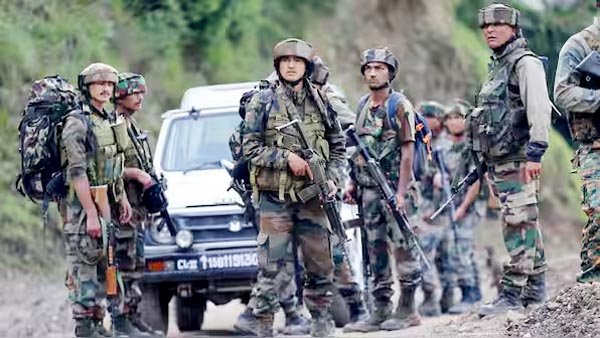
The year started with the biggest deployment of the year, when India launched Op Sindoor to avenge the killings of 26 civilians in a terror attack at Pahalgam.
Planned by the Military Operations Branch of the Army, the execution was monitored from the Ops Room, with Chief of Defence Staff and all three Service Chiefs present.
As part of the four day strike which started on the intervening night of May 6-7, nine terrorist camps across the border were destroyed in which seven camps were neutralised by the Indian Army and two destroyed by the Indian Air Force. Strikes were precise, calibrated and time-bound, reinforcing deterrence while maintaining escalation control
Further, drone attacks were foiled on the nights of 7-10 May 2025 after Pakistan attempted to target military and civilian assets using drones. Indian Army Air Defence units successfully neutralised all threats, preventing damage and casualties. It also demonstrated effectiveness of integrated Counter-UAS and layered air defence systems.
More than a dozen terror launch pads along the LoC were destroyed using Indian Army ground-based weapons and the infiltration routes and terror logistics networks were disrupted. On 10 May, DGMO was approached by his Pakistani counterpart with request for ceasefire following which an understanding was reached to stop firing and military action.
2025 also saw the Indian Army sharpening its Long-Range Strike Edge with a BrahMos missile unit under the Southern Command, conducted a combat-level missile firing on December 1. The launch validated high-speed flight stability and terminal accuracy under simulated battle conditions, reinforcing India’s ability to conduct precision strikes at extended ranges. Throughout the year, extended-range BrahMos variants were also under development and testing, aimed at pushing India’s sensor-to-shooter cycle to faster, more lethal response times.
On June 24, the Army operationalised two additional Pinaka regiments, significantly boosting its ability to deliver mass, rapid and concentrated firepower across the battlefield. This was followed on December 29 by the successful test of the Pinaka Long-Range Guided Rocket (LRGR), with a reported range of around 120 kilometres, adding the ability to strike high-value targets deep behind enemy lines with precision.
Behind the scenes, work also accelerated on next-generation Pinaka variants aimed at 300-kilometre-class ranges.
The year also saw the induction of AH-64E Apache attack helicopters in the Army Aviation Corps. In July the Army received its first three Apaches, with the remaining three delivered in December.
The army also restructured its frontline line units by raising Bhairav Battalions and Ashni Drone Platoons. The world was given the glimpse of Bhairav battalion during a capability demonstration carried out in Rajasthan on October 24. The plan is to operationalise 25 Bhairav light commando battalions on an accelerated timeline, and the raising of Ashni drone platoons across infantry for Intelligence, Surveillance, and Reconnaissance(ISR) and precision effects.
Complementing them are newly structured Shaktibaan Regiments and Divyastra Batteries, built around unmanned aerial systems and loitering munitions, aimed at delivering deep, persistent and highly responsive firepower.
Continuing 2025 as the Years of Tech Absorption the Indian army moved from technology adoption to integration, embedding new technologies.
Along with the induction of six Apache Helicopters, the Indian Army has achieved high state of indigenization in terms of ammunition. Of all the ammunition in use by the Indian Army, 91 per cent are now indigenised.
A variety of Unmanned Aerial Systems (UAS) have been inducted including about 3000 RPAs, about 150 Tethered Drones, Swarm Drones, Logistics Drones for High Altitude Areas and Kamikaze Drones.
In August, an order was placed for Thermal Imager-based Driver Night Sight for BMPs (Army), improving night mobility and mechanised operational tempo; also cleared MALE RPAs for tri-service surveillance/strike roles.
During the Army Commanders’ Conference held at Jaisalmer, Rajasthan in October, deliberations prominently featured Grey Zone Warfare, the roadmap for Jointness, and ‘Aatmanirbharta’ and Innovation, aligning doctrine and force design with the evolving threat spectrum.
The year also saw a boost in the military diplomacy and a number of joint exercises conducted with friendly nations. These included Exercise Shakti (India–France), Exercise Yudha Abhyas (India–USA), Exercise Maitree-XIV (India–Thailand), Exercise AUSTRAHIND (India–Australia), Exercise Mitra Shakti XI (India–Sri Lanka), Exercise Ajeya Warrior (India–UK), and Exercise Desert Cyclone (India–UAE).