

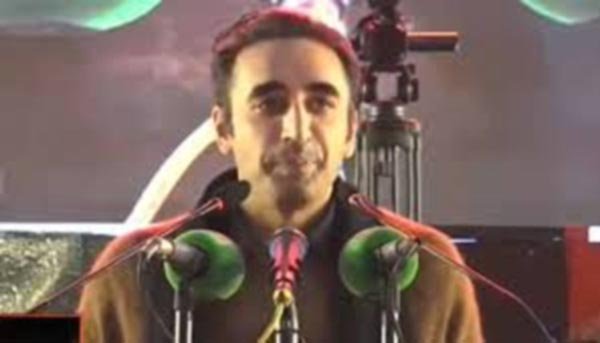
Karachi, Dec 27 (UNI): Pakistan People’s Party (PPP) Chairman and former Foreign Minister Bilawal Bhutto-Zardari on Saturday commenting on the socio-political and economic situation in the country, linked economic prosperity with political stability, viewing the two as synonymous with one another, and said that the one and only person who could steer Pakistan out of its current tumultuous period of political polarisation, was his father and the country’s President Asif Ali Zardari.
Addressing a public gathering in Garhi Khuda Baksh to mark the 18th death anniversary of his mother, former Prime Minister Benazir Bhutto, the PPP chairman said that the long prevalent hostilities between political factions in the country was detrimental to not just its democratic framework, but also to its economy and national security, and therefore urged for easing these bitter divisions, calling it crucial for mitigating Islamabad’s financial woes.
“There is one person who can take Pakistan out of political polarisation — the king of reconciliation — and that person is Asif Ali Zardari,” he said, calling for dialogue and compromise rather than confrontation, reports The News International.
He urged opposition parties to engage responsibly and asked ruling parties to act in accordance with national security interests, rather than focusing on their agendas.
Recalling the turmoil that befell the nation, following the assassination of his mother in 2007, Bhutto said that Benazir Bhutto’s death had hurled Pakistan into a moment of existential crisis, as it found itself facing a massive political void as crowds increasingly chanted the slogan ‘Pakistan na khappay’ (Sindhi for Pakistan is finished).
Crediting Zardari for ridding Islamabad of its period of uncertainty by raising the slogan of ‘Pakistan khappay’ (Long Live Pakistan), and helping preserve the federation by promoting reconciliation and overseeing a democratic transition that ended military rule.
Bilawal Bhutto further said that his mother’s political legacy rejected revenge and extremism, even in the most testing circumstances, and noted that in both her final message to the nation, as well as her last book, the former premier urged reconciliation and political harmony.
Warning that political extremism was again taking root, the PPP chairman said attacks on state institutions fell outside the bounds of democratic politics, in reference to the mounting civil unrest that gripped Pakistan, following the arrest of former PM Imran Khan in May 9, 2023. Decrying the episode, he said incidents such as assaults on military installations and government buildings undermined democratic norms.
Turning to economic governance, Bilawal reiterated the PPP’s demand for greater provincial autonomy. He argued that provinces should be given more authority rather than having powers centralised, including in taxation.
“We can collect more taxes than the FBR if provinces are empowered,” he said, calling for tax reforms to be pursued in coordination with provincial governments.
He also urged the devolution of electricity distribution companies, including Sepco, Hesco and Fesco, saying provincial administrations were better positioned to manage them efficiently.
While acknowledging that inflation remained a serious concern for the public, Bilawal said the rate had declined compared with the previous government, though he conceded that people had yet to feel tangible relief. “The public asks us: if the economy is improving, why don’t we feel it?” he said.
Highlighting initiatives of the PPP-led Sindh government, he said free healthcare was being provided at facilities such as NICVD and Gambat hospitals, with patients also coming from other provinces.
He added that two million homes were being built for flood victims, with ownership rights granted to affected women.
Thanking PM Shehbaz Sharif for declaring an agricultural emergency on the PPP’s recommendation, he said that decision had brought relief to farmers. The PPP leader concluded by urging both the government and the opposition to act with restraint and responsibility, saying the federation could only endure if politics was guided by reconciliation rather than revenge.