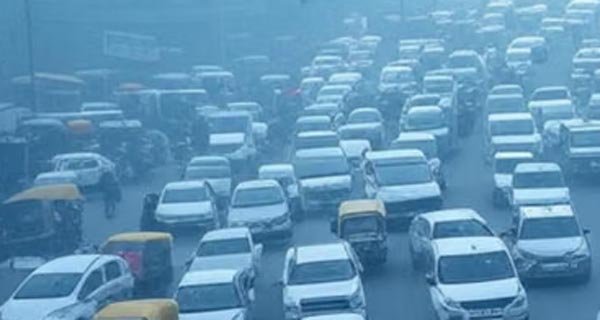





New Delhi, Dec 20 (UNI) The Delhi government has prepared a comprehensive framework for the Electric Vehicles (EV) policy, with an aim to reduce pollution levels in the city, and also to modernise the transport system.
The government’s primary objective is to make the adoption of electric vehicles seamless to an extent that they become the first choice of every resident of Delhi.
The policy is likely to be implemented from the next financial year, and Chief Minister Rekha Gupta stated that it will play an effective role in controlling pollution across the city.
According to the CM, emissions from vehicles are a major contributor to air pollution.
Throwing light on the policy, she emphasised, is not merely about providing financial incentives, but about securing a clean future for Delhi.
“When every citizen adopts EVs, there will be a direct reduction in PM 2.5 and PM 10 levels,” Gupta added.
She said that the government is integrating charging infrastructure and subsidies in a manner that enables Delhi to emerge not only as the country’s, but also the world’s, ‘EV capital’.
CM clarified that under the forthcoming policy, the government’s primary focus will be on financial incentives, and to reduce the significant price difference between petrol–diesel (ICE) vehicles and electric vehicles, adequate subsidies will be provided, she added.
In addition, the Delhi government has already abolished road tax and registration fees on the purchase of EVs, making new vehicles significantly more affordable.
The CM also said that people often express concern about what will happen to their old vehicles if they purchase an EV, and to address this, the government has formulated a ‘scrapping’ plan for old vehicles.
A ‘scrapping incentive’ scheme is being introduced to remove highly polluting vehicles from the roads, and if a citizen scraps an old petrol or diesel vehicle, they will receive additional financial benefits while purchasing a new EV, CM added.
Gupta said that the government has instructed vehicle manufacturers (OEMs) to ensure coordination in line with demand, and they have been asked to ensure the timely supply of vehicles as per market requirements and to keep prices reasonable.
Notably, before finalising the policy, extensive consultations are underway with power distribution companies (Discoms), vehicle manufacturers and scrap dealers, and the draft policy will be made public to invite suggestions from citizens.
The CM also stated that the emphasis is on a ‘single-window’ system and network expansion for EV infrastructure, and apart from major public locations, public charging points will now also be installed near residential colonies.
Facilities for the scientific disposal of old batteries and battery swapping will be developed so that users do not have to wait for long charging times.
She added that vehicle owners will be given sufficient and reasonable time to transition to electric mobility.
CM said that Prime Minister Narendra Modi has repeatedly reiterated on global platforms, country’s commitment to achieving the target of ‘Net Zero’ emissions by 2070.
She said that PM believes that EVs are not merely a means of curbing pollution, but a symbol of a progressive ‘New India’.
Gupta said that she firmly believes that given Delhi’s geography and climate, there is no viable alternative to zero-emission vehicles.
The government considers EVs not a luxury, but a necessity, and the objective is to ensure that EVs are affordable for every middle-class family in the national capital, and that charging them is as easy as charging a mobile phone.
War against pollution: Delhi govt to implement new EV policy in next financial yr