



Jayanta Roy Chowdhury
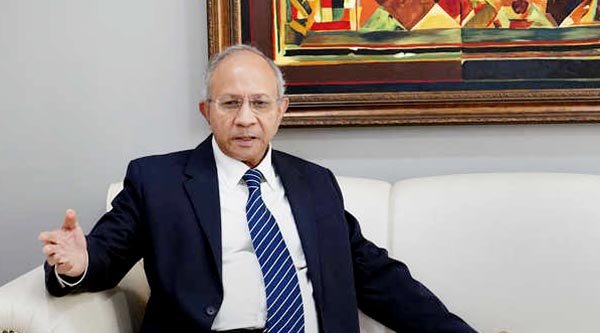
New Delhi, Dec 19 (UNI) In the wake of mob attacks on Indian missions in Bangladesh, Pankaj Saran, former Deputy National Security Advisor, has said that India and Bangladesh “must not allow any forces to disrupt” what he described as a “natural relationship” between the two countries.
In an exclusive interview to UNI, Saran, who served as India’s High Commissioner to Bangladesh during a crucial phase in the neighbouring country’s political life, cautioned that “inflammatory actions and statements only serve to vitiate the atmosphere.” He was referring to remarks made by various student leaders in Bangladesh that have been critical of India and against Indian diplomats.
He also said New Delhi would closely “watch the situation to ensure that no harm comes to the Indian High Commission or to Indian diplomats” posted in the neighbouring country.
Bangladesh witnessed a night of widespread violence from late Thursday into Friday morning, as coordinated mobs went on a rampage across Dhaka and several other cities following the death of Sharif Osman Hadi, a key leader of the Inqilab Mancha movement in a hospital in Singapore.
The unrest has raised serious concerns over internal security, press freedom, and the safety of diplomatic missions in the country.
Among the targets were Indian Missions in Khulna and Chattogram, besides political leaders and journalists who have been critical of the current regime. Also targeted were offices of newspapers – Daily Star and ‘Prothom Alo’ – and liberal cultural organisation ‘Chayanaut’. Slogans such as “Boycott India,” “Burn Awami League dens,” and “Hadi’s blood will not go in vain” echoed through the streets.
Expressing hope that “good sense will prevail,” Saran underlined that while protests are an integral part of any democracy, they must be “conducted strictly within the bounds of the law.”
The former Indian diplomat and strategist added that a “vast majority of people in Bangladesh want a normal relationship with India”, which, he said, has always been the real strength of bilateral ties.
Commenting on reports of Pakistan, Turkey and China sending various delegations to Bangladesh, including Pakistani military and intelligence delegations, Saran noted the current interim administration in Dhaka has initiated contacts with Pakistan.
“We will have to watch closely the direction and intention behind these interactions,” he said. Saran noted that it was no secret that India’s relations with Pakistan remain fraught with tension. “We do not regard Pakistan as a reliable neighbour. We see it as a neighbour that works against India,” he said, adding that he hoped the interim government in Bangladesh would keep these sensitivities in mind.
He said that if Pakistan and Bangladesh wished to re-establish stronger contacts, that in itself was not an issue, “as long as it is not directed against India or against India’s security interests.”
Speaking of the planned elections in Bangladesh in February next year, Saran, who also heads the influential strategic think tank NatStrat said, “all well wishers hope the elections proceed .., they are inclusive, free and fair” and added that after all the student protests in July-August 2024 which eventually led to Sheikh Hasina leaving Dhaka was all “about democracy.”
Inplicit in that statement was that India would like all political parties to be allowed to take part in the forthcoming elections and that mob-attacks of the kind being witnessed in Dhaka where offices of newspapers such as DailyStar and Prothom Alo and cultural organisations like Chayanaut have been vandalised and set on fire should not be allowed.
Elections are formally scheduled for February 2026, but their credibility remains deeply uncertain. The Awami League, still the single largest political force in the country, has been barred from contesting. Many of its senior leaders languish in jail; others have fled to India or further abroad. The Bangladesh Nationalist Party, which initially benefited from Hasina’s fall, has seen its popularity erode amid allegations that its cadres have engaged in widespread extortion during the prolonged instability.
India, Bangladesh must not allow any forces to disrupt relations: Saran