


Muskan Bhatia
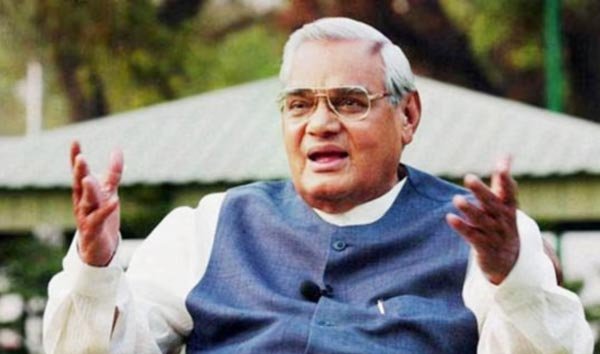
New Delhi, Dec 16 (UNI) Atal Sansmaran is a political memoir that weaves together key moments from India’s recent history with author Ashok Tandon’s experiences as a journalist who worked closely with former Prime Minister Atal Bihari Vajpayee, including his tenure as media adviser in the Prime Minister’s Office. Conceived as a tribute in Vajpayee’s birth centenary year, the book goes beyond a record of events to explore the many facets of the statesman’s personality, leadership style, and political philosophy.
Drawing upon intimate, frequently ambivalent encounters with Atal Bihari Vajpayee, the narrative unfolds a textured portrayal that transcends conventional political biography. It offers subtle yet revealing glimpses into his personal interactions with a constellation of prominent figures and pivotal institutions, not least the Rashtriya Swayamsevak Sangh, whose influence both intersected and occasionally conflicted with his own sensibilities. These recollections illuminate the complex interplay between Vajpayee’s public persona and private convictions, portraying a statesman whose character was as profoundly shaped by dialogue, negotiation, and dissent as it was by rigid ideological frameworks.
The memoir revisits several defining episodes of Vajpayee’s prime ministerial tenure, among them the Pokhran nuclear tests, the Kargil War, the Agra Summit, and the Indian Airlines hijacking, placing them alongside reflections on opposition politics during politically volatile years.
Rather than unfolding as a chronological narrative, the book reads as a selective remembrance shaped by proximity and perspective. Moving through the corridors of power, Tandon offers readers a vivid account of the 1998 Pokhran nuclear tests-an initiative that earlier prime ministers had approached with caution, if not outright hesitation.
Under Vajpayee, India not only went ahead with the tests but did so while evading satellite surveillance by Western intelligence agencies. The operation triggered strategic and economic sanctions from the West, yet it also marked a decisive assertion of India’s strategic autonomy.
Revisited at a moment when India continues to navigate a fragmented and increasingly complex global order, these recollections resonate beyond nostalgia. The Pokhran episode, as narrated here, underscores an approach to statecraft that combined political resolve with calculated risk, qualities that remain central to contemporary debates on India’s foreign policy, national security, and strategic autonomy.
Atal Sansmaran offers younger readers an immersive account of leadership that balances firmness with restraint. Through episodes drawn from Vajpayee’s tenure, the book illustrates how a nation, under decisive yet sensitive leadership, can assert itself on matters of national security while simultaneously advancing people-centric initiatives-even amid the complexities of a politically unstable ground. Vajpayee’s ability to lead a non-majority government without sacrificing either authority or consensus-building emerges as a recurring theme. The memoir also underscores his enduring emphasis on peace, cooperation, and the necessity of stable and peaceful neighbourhoods.
One of the most evocative moments recalled is Vajpayee’s address to the people of Pakistan, delivered via live broadcast from the lawns of the Governor’s House in Lahore. His words, “We have fought enough. How long will we continue to fight among ourselves? Let us fight poverty and disease together… We can change friends, but not neighbours”, capture a statesman’s conviction that dialogue and development must accompany deterrence. The episode reinforces a central argument of the memoir: that strength in leadership need not preclude empathy or the pursuit of peace.
Together, Tandon’s book functions both as remembrance and record, of a leader, a profession, and a period marked by upheaval and transition.
Power, restraint, and memory: Reading Vajpayee through Atal Sansmaran