




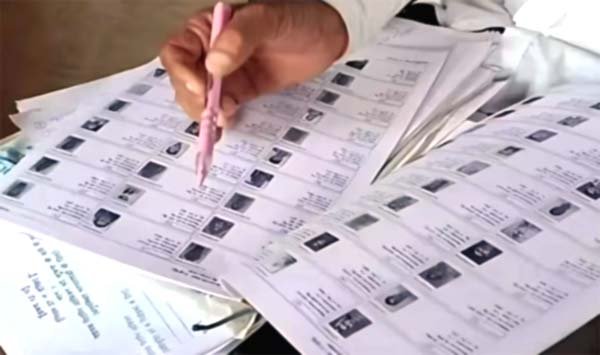
Kolkata, Dec 16 (UNI) Kolkata has emerged as the biggest contributor to voter deletions in West Bengal, accounting for nine of the 10 Assembly constituencies where the maximum number of names have been dropped from the draft electoral rolls following the Special Intensive Revision (SIR), according to data released by the Election Commission.
North Kolkata witnessed the highest concentration of deletions. Jorasanko Assembly constituency topped the list, with 72,899 voters deleted, accounting for 36.85 per cent of its electorate.
It was followed by Chowringhee, in Central Kolkata, where 74,510 names were removed, or 35.44 per cent of voters.
Howrah North stood third on the list, with 60,436 voters deleted (26.96 per cent).
Other constituencies with high deletions include Kolkata Port (63,717 or 26.17 per cent), Ballygunge (65,165 or 25.54 per cent), Shyampukur (42,304 or 24.06 per cent), Kashipur–Belgachhia (53,365 or 23.96 per cent) and Beleghata (56,493 or 22.42 per cent).
Together, nine of the top 10 constituencies with the highest deletions are located in Kolkata.
The Commission had announced the schedule for the SIR on October 27, when the total number
of voters in the state stood at 7,66,37,529.
As per official figures, a total of 58,20,899 voters has been deleted from the draft rolls after verification.
Election officials said names were retained in the draft list if the enumeration form carried a signature, while voters who were found to be deceased or no longer residing in the area were identified and removed.
In contrast, the Commission has also released a list of 10 Assembly constituencies with the lowest number of deletions.
Bankura’s Kotulpur recorded the least deletions in the state, with 5,678 names removed, amounting to 2.21 per cent of voters.
It was followed by Nandakumar in East Midnapore where 6,651 names with a percentage of 2.46 per cent were dropped.
Other constituencies on the low-deletion list include Sabang (6,976 or 2.50 per cent), Karimpur (6,559 or 2.51 per cent), Patashpur (6,418 or 2.55 per cent), Bhagabanpur (6,853 or 2.55 per cent), Mahishadal (6,680 or 2.58 per cent), Moyna (7,101 or 2.62 per cent), Kanthi North (7,264 or 2.69 per cent) and Chandipur (7,120 or 2.72 per cent).
The Election Commission has asked voters to raise objections or point out errors in the draft list.
Objections will be followed by hearings, after which documents will be verified before the final electoral roll is prepared.
The final list is scheduled to be published on February 14, 2026.
For the purpose of verification, voters have been categorised into three groups — self-mapping, progeny mapping and non-mapping.
Those whose names appeared in the 2002 electoral roll, the last time an SIR was conducted in the state, fall under self-mapping. Voters whose names were not in the 2002 list but whose parents or relatives were included are classified under progeny mapping.
Those with neither their own names nor relatives’ names in the 2002 roll are placed in the non-mapping category.