




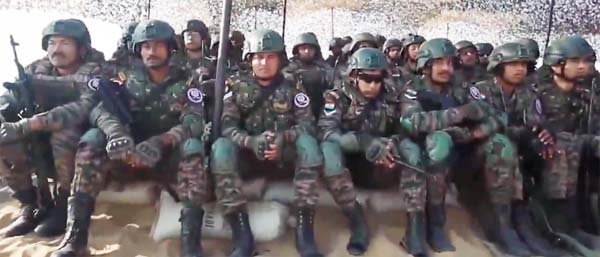
New Delhi, December 10 (UNI) The ongoing fifth edition India–Malaysia joint military exercise Harimau Shakti 2025 entered a high-intensity training phase, incorporating advanced tactical manoeuvres and heliborne insertion techniques. This phase is designed to further strengthen interoperability and operational synergy between the Indian Army and the Malaysian Armed Forces, the army spokesperson stated.
As part of the ongoing module, troops were introduced to Counter-Insurgency and Counter-Terrorism (CI/CT) concepts, followed by an in-depth lecture-cum-demonstration on patrolling techniques. Mixed teams executed joint patrolling rehearsals to refine coordination, enhance situational responsiveness and improve mission planning under simulated operational conditions. The exercise also featured discussions focused on sharpening decision-making and operational cohesion during dynamic scenarios.
Ambush theory sessions and practical demonstrations were conducted to strengthen small-team offensive capabilities, while a structured Command Post Exercise (CPX) reinforced tactical planning and battlefield management skills. Slithering drills, showcasing critical heliborne insertion techniques suited for dense and restrictive terrain, further added to the realism and operational value of the exercise.
With progressive modules including ambush manoeuvres, slithering demonstrations, live firing practices and seamless joint patrolling, Harimau Shakti 2025 continues to elevate tactical proficiency, modern warfare adaptability and combined combat readiness. The exercise stands as a testament to the deepening defence cooperation and mutual trust between India and Malaysia.
The exercise, underway in Mahajan Field Firing Range, Rajasthan, commenced on 5th December. While the Indian contingent is being represented mainly by troops from the DOGRA Regiment, the Malaysian side is being represented by troops from the 25th Battalion Royal Malaysian Army.
The aim of the exercise is to jointly rehearse conduct of Sub Conventional Operations under Chapter VII of United Nations Mandate.