






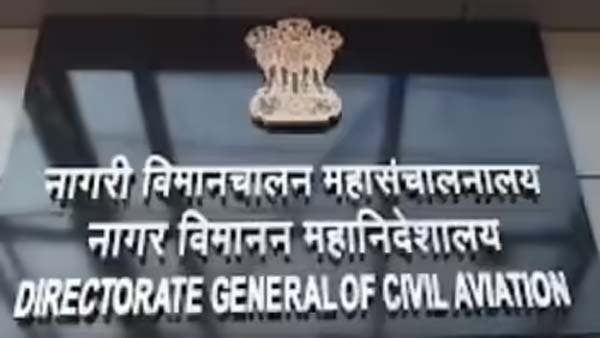
New Delhi, Dec 8 (UNI) Nearly half the positions at the Directorate General of Civil Aviation (DGCA),the country’s aviation regulator, are lying vacant, but the government says this has had no impact on its functioning.
Minister of State for Civil Aviation Murlidhar Mohol told the Rajya Sabha in a written reply to an unstarred question on Monday that the DGCA has 1,630 sanctioned posts, out of which 794 (49 pc) are vacant. Similarly, the Bureau of Civil Aviation Security (BCAS), which oversees aviation safety, has 203 vacancies out of 598 sanctioned posts.
The government’s response further noted that the Airports Authority of India (AAI), which manages government airports across the country and provides air navigation services in Indian airspace, has 9,771 vacancies out of 25,730 sanctioned posts.
Of the 5,537 sanctioned posts for Air Traffic Control Officers (ATCOs) -responsible for air traffic control at all airports- 1,260 posts remain vacant.
Civil Aviation Minister K. Ram Mohan Naidu, responding to a starred question, said “The shortage of staff/officers has not affected the functioning of the DGCA… The vacancies in ATCO posts have not had any impact on aviation safety.”
He informed the House that the DGCA has created 441 posts in the last three years.
As part of efforts to fill vacancies, 22 officers have joined the DGCA in the last four months, and 42 officers have been promoted internally.
Besides, the selection process for 62 technical officers, five flight operations inspectors, and eight stenographers has been completed, while exams to recruit 121 operational officers have also been held.
Listing the reasons for vacancies, Naidu said they include insufficient applications for advertised posts, selected candidates not joining, and inadequate response to deputation notifications.
As a result, the ministry is attempting to hire staff on short-term contracts.
Mohol added that in 2025, action has been taken in 19 cases related to violations of safety standards.
The number was 22 last year, and 10, seven and two cases in 2023, 2022 and 2021, respectively.
Major violations include failing breathalyser tests, non-compliance with flight data monitoring, unauthorised entry into cockpits, and shortcomings in internal and quality assurance audits.
Appropriate action has been taken against those found guilty.