






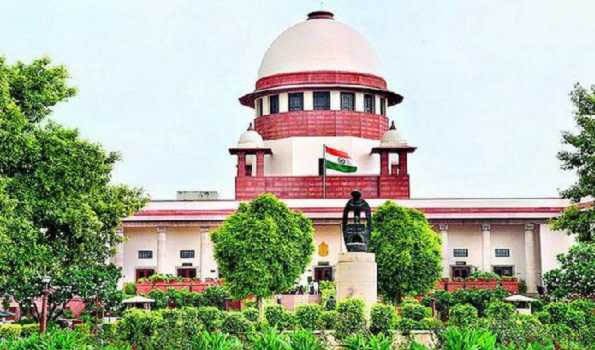
New Delhi, Dec 8 (UNI) In a major step towards gender inclusion in the legal profession, the Supreme Court on Monday directed that 30 per cent of the seats in State Bar Councils, where elections are yet to be notified, must be represented by women advocates.
A Bench comprising Chief Justice of India Surya Kant and Justice Joymalya Bagchi held that, for the current election cycle, 20 per cent of seats will be filled by elected women members, and 10 per cent through co-option.
The Court said a proposal for co-option must be placed before it in cases where women candidates are insufficient in number.
However, the Court clarified that no reservation will apply to the six State Bar Councils where election processes have already commenced, Andhra Pradesh, Punjab & Haryana, Uttar Pradesh, Telangana, Bihar and Chhattisgarh.
Even so, the Bench urged voters in these states to ensure that women receive adequate and meaningful representation through their ballots.
The Court underscored the need for proactive steps to uplift women in the profession.
“Wherever women members are reluctant to come forward to contest the 20 per cent seats, the process of co-option will also be undertaken so that women ultimately secure 30 per cent representation,” the order stated.
The directions came in petitions filed by Yogamaya M.G. and Shehla Chaudhary, seeking reservation for women in State Bar Councils.
Last week, the Court had directed the Bar Council of India (BCI) to submit a proposal for ensuring 30 per cent women representation.
Appearing for BCI, its Chairperson and Senior Advocate Manan Kumar Mishra informed the Court that the Council supported the principle of 30 per cent reservation but requested that vacancies be filled through co-option this year.
He suggested a 15 per cent co-option cap, but the Bench limited co-option strictly to 10 per cent.
Senior Advocate Meenakshi Arora highlighted practical challenges, noting that several states have a very small percentage of practising women advocates.
Senior Advocate Shobha Gupta and Advocate Sriram Parakkat represented petitioner Yogamaya. Advocate Charu Mathur appeared for petitioner Shehla Chaudhary.
Supporting the petitioners, K. Balu, Co-chairman of the Tamil Nadu Bar Council, intervened through Advocate-on-Record Karunakaran, pointing out that entrenched leadership patterns, “once a chairman, always a chairman” needed to change.
Senior Advocate Vinay Navare appeared for Jan Adalat, an NGO advocating reforms for lawyers.
With this order, the Supreme Court has taken a significant step toward gender-balanced governance in bar institutions across India.