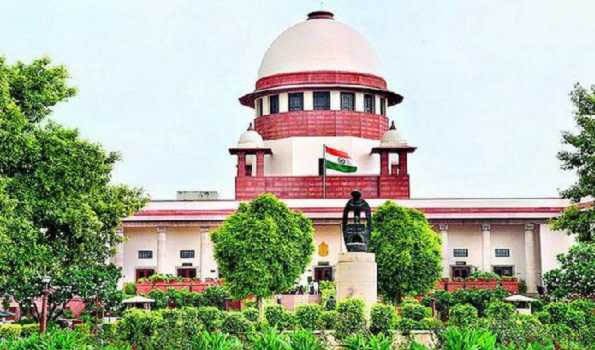






New Delhi, Dec 1 (UNI) The Supreme Court on Tuesday asked whether the Government of India has ever issued an order declaring Rohingyas as “refugees,” while hearing a habeas corpus petition alleging the custodial disappearance of five Rohingya individuals picked up by Delhi Police in May.
A Bench led by Chief Justice of India Surya Kant, while responding to the petitioner’s submissions, remarked, “Where is the order of the Government of India declaring them as refugees? Refugee is a well-defined legal term, and there is a prescribed authority to declare someone a refugee. If there is no legal status and someone is an intruder who has entered illegally, do we have an obligation to keep them here?”
The Court further observed that the matter would be heard along with other connected petitions pending on the issue.
Expressing concern over national security implications, the CJI added, “We have a very sensitive border in North India. If an intruder comes, do we give them a red carpet welcome and offer all facilities?”
The remarks come days after the Supreme Court sought clarity on the legal status of Rohingyas and Bangladeshi migrants while hearing a batch of petitions seeking directions for their detection and deportation.
Earlier, a Bench comprising Justices Surya Kant, Dipankar Datta, and N Kotiswar Singh had framed the following issues for consideration in the pending matters: Whether Rohingyas are to be declared as refugees, and what protections flow from such a status? If they are illegal entrants, whether the Centre and states obligated to deport them? Whether such illegal entrants can be detained indefinitely, or are they entitled to bail? Whether refugees housed in camps being provided basic amenities such as sanitation, drinking water, and education?
The issue has been before the Court on several occasions. In 2022, then CJI NV Ramana, while hearing a plea by Advocate Ashwini Kumar Upadhyay seeking urgent detection and deportation of Rohingya–Bangladeshi migrants, had observed: “These are important issues, but what is the purpose of elected representatives?”
Upadhyay’s PIL referred to the Centre’s 2021 statement in the Rajya Sabha, estimating nearly 20 million illegal Bangladeshi migrants living in India.
The petition sought directions to amend laws to make illegal migration a cognisable, non-bailable, and non-compoundable offence, criminalise the making of forged identity documents, and identify officials and agents involved in facilitating such activities.
The plea further stated that large-scale illegal migration from Myanmar and Bangladesh had altered the demographic balance of border districts, threatened national security, and made the identification of infiltrators more urgent than ever.
The Supreme Court will continue hearing the matter along with related petitions.
SC questions legal status of Rohingyas while hearing habeas corpus plea