





By Dr. Shagufta Yasmin
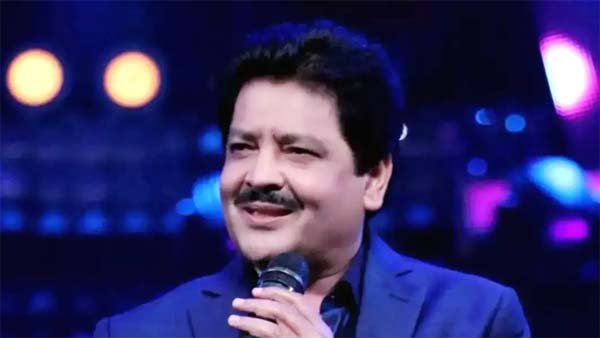
Mumbai, Dec 1 (UNI) Udit Narayan, one of India’s most cherished playback singers, discovered his first love and lifelong passion early in life: singing.
Born on December 1, 1955, in Baisi, Supaul, Bihar, he grew up surrounded by music. His father, Hare Krishna Jha, was a farmer, while his mother, Bhuneshwari Devi, was a renowned Maithili and Bhojpuri folk singer.
From her, Udit inherited not just talent but an enduring devotion to music, a devotion that carried him through years of struggle and eventually propelled him to stardom.
His breakthrough came with the 1988 film Qayamat Se Qayamat Tak and the unforgettable song “Papa Kehte Hain Bada Naam Karega,” though he modestly insists, “I worked very hard to earn this position.”
Udit’s musical journey began at the age of five or six. Growing up in a singing household and listening to radio broadcasts, rare in most homes at the time, he developed a deep love for music.
He performed at village fairs, kirtans, and functions, starting with Maithili folk songs. After matriculating from Jagatishwar High School in Supaul, he moved to Kathmandu in the 1970s, where Radio Nepal became a significant milestone. There, he sang Nepali, Maithili, and Bhojpuri folk and modern songs.
To support himself, he also performed in five-star hotels, all while completing his graduation at Ratan Rajya Laxmi Campus, Tribhuvan University.
In 1978, Udit received a music scholarship from the Indian Embassy and moved to Mumbai, where he trained in classical singing for six years at Bharatiya Vidya Bhavan.
During this time, he observed and learned from leading music directors like Laxmikant–Pyarelal, R. D. Burman, Rajesh Roshan, Kalyanji–Anandji, and Bappi Lahiri, who encouraged him to remain dedicated and work hard.
His first break came in 1980 when Rajesh Roshan gave him a song in the film Anis Bees, alongside legends Mohammad Rafi and Asha Bhosle. While opportunities from Kalyanji–Anandji, Prakash Mehra, and Chitragupt followed, success remained elusive until Qayamat Se Qayamat Tak.
Udit recalls feeling disheartened during the film’s initial week, considering returning to his village. But as the movie gained momentum, it became the turning point of his career.
Following this breakthrough, Udit Narayan delivered an impressive string of hits in films such as Beta, Dil, Dilwale Dulhania Le Jayenge, Darr, Dil To Pagal Hai, Kuch Kuch Hota Hai, Gadar: Ek Prem Katha, Lagaan, and Veer-Zaara.
He has sung in nearly 40 languages, including Hindi, Telugu, Kannada, Tamil, Bengali, Sindhi, Odia, Bhojpuri, Nepali, Malayalam, Assamese, Bagheli, and Maithili, and has performed pop, semi-classical, bhajans, and folk songs. His discography includes an estimated 21,000–25,000 songs.
The 1990s marked a period of intense artistic growth, during which he shared the musical limelight with Kumar Sanu. While both achieved immense fame, Udit describes their rivalry as a healthy competition that pushed them to excel.
Honoured with four National Film Awards, five Filmfare Awards, the Padma Shri in 2009, and the Padma Bhushan in 2016, he regards these recognitions as milestones in a career built on dedication.
Udit’s son, Aditya Narayan, continues the musical legacy, often sharing the stage with his father on reality shows. To aspiring artists, Udit advises: “Sing your songs so well that they pierce people’s hearts.
Keep promoting your work and strive to do even better.” This philosophy has kept Udit Narayan a beloved icon for decades, a star whose voice transcends borders and generations.