





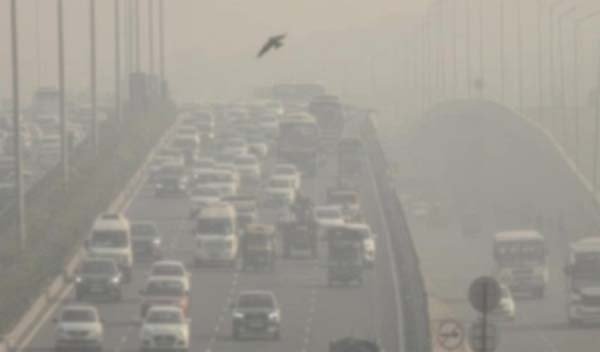
New Delhi, Nov 23(UNI) Delhi’s air quality on Sunday recorded its 10th straight day in the ‘very poor’ category, with the city’s 24-hour average Air Quality Index (AQI) rising to 391 at 4 p.m., according to data from the Central Pollution Control Board(CPCB).
Foul air was recorded at all 39 monitoring stations across Delhi. Wazirpur (459), Vivek Vihar (457) and Rohini (453) were the worst affected with AQI readings crossing the 450 mark, and several other stations reported severe pollution levels with readings breaching the 300 level.
In the NCR region, Greater Noida’s air quality hovered just below the severe mark with an AQI of 399. While in Noida and Ghaziabad, the levels crossed the severe mark and stood at 418 and 437, respectively. Gurugram and Faridabad fared slightly better, logging AQI levels of 295 and 237, respectively, both falling in the ‘poor’ range.
As per the CPCB classification, air quality readings between 300-400 fall under the ‘very poor’ category, which causes respiratory illness on prolonged exposure, while AQI levels above 400, in the ‘severe’ category, affect healthy people and seriously impact those with existing diseases.
Amid rising pollution levels, the Commission for Air Quality Management for NCR and adjoining areas on Saturday revised the Graded Response Action Plan(GRAP). In a press release, the CAQM said measures earlier reserved for the ‘severe’ category under GRAP Stage IV would now be enforced at Stage III.
The pollution watchdog also shifted several stricter measures from GRAP Stage 3 to Stage 2, and Stage 2 to Stage 1.
The steps include ensuring an uninterrupted power supply to reduce diesel generator use, deploying additional personnel at traffic congestion hotspots, issuing pollution alerts across media platforms, and expanding CNG and electric public transport fleets with increased service frequency, along with differential fares to promote off-peak travel.
Several measures earlier placed under Stage 3 for the ‘very poor’ category have now been moved to Stage 2. These include staggered working hours for government offices in Delhi, Gurugram, Faridabad, Ghaziabad and Gautam Buddh Nagar. The Centre may also consider staggered timings for its offices in the region, the agency recommended.
Restrictions previously meant for Stage 4 during severe AQI, such as allowing public, municipal, and private offices to function with only 50 per cent staff and requiring the remaining employees to work from home, will now be applicable at Stage 3, the notification stated.
In line with the CAQM’s directive, the Delhi government has directed private offices to operate with 50 per cent on-site staff and allow the rest to work from home as a precautionary measure, as the capital continues to grapple with deteriorating air quality.
On Sunday, the city’s minimum temperature recorded a drop of nearly 1.5 degrees Celsius from the previous day’s minimum and stood at 10.4 degrees Celsius while the maximum settled at 26.7 degrees Celsius, according to the India Meteorological Department (IMD). The forecast for the minimum temperatures are likely to be normal during next 24 hours and below normal, registering a drop between 1.6 and 3.0 degrees Celsius thereafter, said the IMD.