





Arti Bali
New Delhi, Nov 21(UNI) As conflicts deepen and global power centers shift, the international system is entering one of its most volatile periods in decades. The war in Ukraine is grinding into its third year with no end in sight, while Israel’s conflict with Hamas has thrown the Middle East into renewed turmoil. Across Europe, governments are scrambling to fortify their defenses, and Russia is signaling a return to Cold War–era military competition with tests of new strategic weapons.
Against this backdrop, the United States is revisiting debates that once seemed relegated to history. President Donald Trump has directed the Department of War to prepare for the possibility of resuming U.S. nuclear testing—a step that would overturn a three-decade moratorium and reintroduce a level of nuclear brinkmanship not seen since the late 20th century.
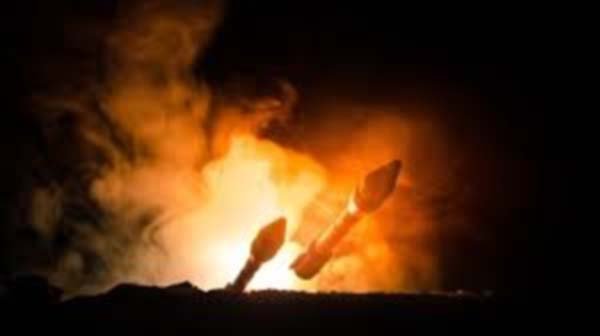
The move followed Russian President Vladimir Putin’s announcement of a successful test of the Poseidon nuclear-powered underwater drone, designed to inundate coastal regions with radioactive tsunamis, along with continued progress on Russia’s Burevestnik nuclear-powered cruise missile.
If the US re-starts nuclear testing, this would end the three-decade-long American moratorium on nuclear test explosions,bringing with it an increasingly unstable nuclear era.
The Kremlin has reacted by saying it would “act accordingly” if the Cold War–era moratorium on nuclear weapons testing were broken. Trump’s move is also provoked by China’s growing array of nuclear warheads.
China’s arsenal, according to Pentagon projections, is expected to reach 700 deliverable warheads by 2027 and 1,000 by 2030. Meanwhile, the United States remains bound by the New Strategic Arms Reduction Treaty, or New START, which caps US and Russian deployed warheads at 1,550. Russia suspended its participation last year, yet Putin has signaled a willingness to observe the treaty’s limits for another year—an overture Trump has cautiously welcomed. But with the treaty set to expire in February 2026, and Russia showcasing new weapons programs even as the war in Ukraine grinds on, the future of arms control is highly uncertain.
In 2023, a 12-member bipartisan Congressional Commission on the Strategic Posture of the United States reported on a “looming two-nuclear-peer threat environment” and recommended that the U.S. urgently prepare for this new reality.
The Strategic Posture Commission (SPC) outlines the evolving nuclear postures of Russia and China during 2027–2035 and proposes over 80 recommendations for U.S. defense policy, nuclear and conventional weapon capabilities, the U.S. nuclear weapons complex, and nuclear arms control.
Ahead of Trump’s recent summit with Putin in Alaska, the National Security Council met with nuclear experts to assess the U.S. deterrent and explore whether Washington should seek a new agreement that includes China alongside Russia. Trump has said future negotiations may need to wait until the conflict in Ukraine is resolved. Putin, for his part, has echoed interest in what he described as “long-term conditions for peace,” including potential follow-on agreements on offensive strategic arms—though he offered few specifics.
The Alaska meeting concluded without a breakthrough, but both sides indicated they are open to continuing discussions based on provisional understandings reached during talks involving senior advisers.
The shifting nuclear landscape is not limited to the great powers. Former Indian ambassador Anil Trigunayat points to increasingly volatile rhetoric from Pakistan, including nuclear threats issued during the 2019 crisis following the Pulwama attack.
India maintains a No First Use policy, but Trigunayat argues that New Delhi may eventually need to reassess its doctrine as it faces growing pressure from both Pakistan and China. “Every country is tweaking its nuclear posture,” he said, adding, “The threshold for nuclear use is becoming lower by the day.”
Across Europe, governments are responding with their checkbooks. Defense spending among EU member states is expected to rise to €381 billion in 2025, up from €343 billion in 2024—a nearly 20 percent jump driven largely by concerns over Russia and the erosion of traditional security arrangements.
With nuclear-armed states modernizing their arsenals, arms-control agreements expiring, and global crises multiplying, the prospect of renewed nuclear testing threatens to accelerate an emerging arms race. The world is edging toward a more dangerous era—one defined less by restraint than by rivalry, mistrust and the unsettling return of Cold War logic.