





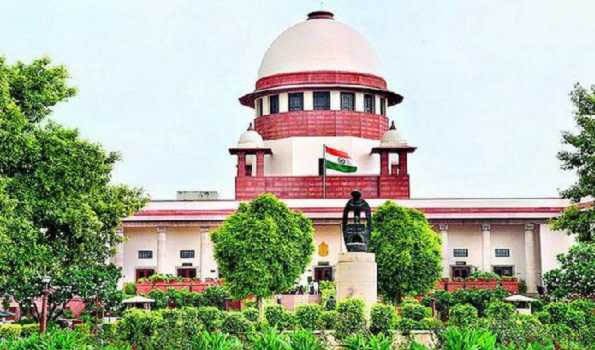
New Delhi, Nov 18 (UNI) The Supreme Court has again refused to direct the union government to publicly disclose the names of candidates shortlisted for appointment to the Central Information Commission (CIC), cautioning that such disclosure at this stage may prove counter-productive and delay the process further.
A bench comprising Justice Surya Kant and Justice Joymalya Bagchi was hearing a public interest litigation on Monday filed by RTI activist Anjali Bhardwaj seeking greater transparency and timely appointments to the Central and State Information Commissions.
Advocate Prashant Bhushan, appearing for the petitioners, argued that disclosure of shortlisted candidates is essential so that any individual with relevant information on their eligibility or conduct may come forward before appointments are finalized. He relied on the Supreme Court’s 2018 judgment, which had held that names of shortlisted candidates for Information Commissions must be made public.
However, Justice Kant pointed out that premature disclosure could trigger allegations and counter-allegations, thereby giving the State a justification to keep appointments in abeyance.
“If a wrong person is appointed, you can challenge it. But disclosure at this stage may be counter-productive,” the bench said.
The court also declined at this stage to summon the Secretary of the Department of Personnel and Training (DoPT) over the continued delays in filling vacancies, despite earlier assurances that the recruitment process would be completed by April 2025. The bench directed Additional Solicitor General KM Nataraj to communicate the Court’s concerns to the DoPT and return with instructions.
“We have no reason to doubt that the competent authority will take necessary initiative to fill up the vacancies,” the court noted. The bench was informed that despite the Centre’s earlier assurances, the CIC continues to function with only two Information Commissioners, leaving the post of Chief Information Commissioner vacant.
Petitioners submitted that there are more than 26,800 appeals and complaints pending before the commission. The court was also informed that several State Information Commissions are either defunct or functioning with severe shortages.
The Commissions in Jharkhand and Himachal Pradesh remain non-operational due to longstanding vacancies, while Tamil Nadu has one vacancy pending approval with the Governor. On the other hand, Rajasthan, Uttar Pradesh, West Bengal and Karnataka have filled most vacancies and are functioning at near full strength.
Taking note of the situation in Tamil Nadu, the court directed that necessary approval be granted at the earliest to fill the vacancy, and further asked the state to consider increasing the sanctioned strength of commissioners to address pendency.
For Madhya Pradesh, where seven posts are vacant and the State was not represented in Court, the Bench ordered the Chief Secretary to immediately commence the appointment process and submit a compliance report, warning that the official may be required to remain present if no progress is made.
In the case of Chhattisgarh, the state sought six weeks to move forward after a stay imposed by the High Court on the recruitment process was lifted on November 11.
On Bihar, the bench said it would review the status once the state stabilizes after the elections. The petitions argue that the failure to fill vacancies and the continued opacity in the appointment process undermine the Right to Information Act, thereby weakening the constitutional right to information under Article 19(1)(a).
Bhushan submitted that the union and several states are not serious about ensuring functional and effective Information Commissions and that “until this court cracks the whip, nothing is going to happen.”
The court adjourned the matter and directed the ASG to return with instructions from the Centre regarding the timeline and steps for filling the vacancies, before listing the case for further hearing.