





By Ramesh Bhan
New Delhi, Nov 17 (UNI) Bangladesh is on the boil again.
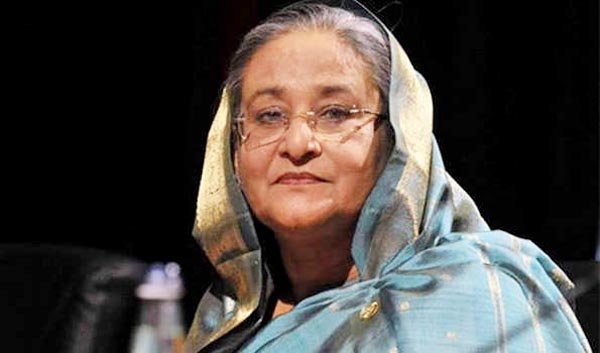
Bangladesh’s ousted Prime Minister Sheikh Hasina was awarded death sentence in absentia by the country’s International Crime Tribunal (ICT) for ”crimes against humanity” over a crackdown on students’ uprising in 2024. Sheikh Hasina was convicted of crimes including murder, extermination, torture and other inhumane acts. However, she pleaded not guilty and described the judgement as “politically motivated.”
Along with Sheikh Hasina former Home Minister Asad Uzzaman Khan Kamal was also sentenced. Former Inspector General of Police (IGP) Chowdhury Abdullah Al-Mamun was awarded five years jail after he turned state witness.
The judgement has put the country on the edge once again, for the second time after a student uprising in July-August, 2024, ousted Sheikh Hasina from power.
The ICT verdict on Sheikh Hasina has undoubtedly created extraordinary churn and uncertainty at home, in the region and geopolitically.
The judgement sparked off widespread unrest in the country, mainly capital Dhaka where Sheikh Hasina’s supporters came out on the streets and resorted to violence. Sheikh Hasina’s Bangladesh Awami League has already announced a two-day shutdown across the country, disrupting normal life.
Following the judgement, Dhaka was put on high alert and security was tightened throughout the capital city. Personnel from the Army, police, Rapid Action Battalion (RAB) and Border Guard Bangladesh (BGB) were deployed.
Violence erupted in several parts of the country. Sheikh Hasina’s Party activists took out processions in several places in protest against the verdict. Crude bombs were also detonated in some places. More than 50 activists of Sheikh Hasina’s Awami League have been arrested so far. Capital city Dhaka has been placed under unprecedented security cover and ‘shoot-at-sight orders’ have been issued against those indulging in arson and looting.
There has been growing demand for Sheikh Hasina’s return. The timing of the ICT verdict against Sheikh Hasina is significant as it comes ahead of Bangladesh’s interim government announcement of the elections next year.
Although officially India has refrained so far from commenting on the evolving situation, experts feel concerned at such development in India’s immediate neighbourhood. Experts say Pakistan which has already set feet in Bangladesh, could exploit the situation.
A senior Indian government official, on condition of anonymity, said the government is closely monitoring the situation. He did not elaborate.
If the situation escalates, it could push the country into the abyss of destabilisation for the second time since 2024 uprising that seemed to have US blessings and brought in Nobel Laureate Mohammed Yunus to power as Advisor and head of the interim government.
The US State Department had in 2024, after the unrest, in its Country Report on Human Rights Practices in Bangladesh also accused the Sheikh Hasina government of human rights violations. The State Department report said ”Significant human rights issues – primarily under the previous government – included credible reports of arbitrary or unlawful killings; disappearances; torture or cruel, inhuman, or degrading treatment or punishment; arbitrary arrest or detention; transnational repression against individuals in another country by the previous government, serious restrictions on freedom of expression and media freedom, including violence or threats of violence against journalists, unjustified arrests or prosecutions of journalists, and censorship; significant restrictions on workers’ freedom of association; violence or threats against labour activists or union members; and significant presence of the worst forms of child labour.” It was a verdict by the US against the Sheikh Hasina government and endorsement of the uprising.
The report by the US State Department confirmed that US had intervened to overthrow Sheikh Hasina who was seen as pro-India. The opportunity was exploited by China and Pakistan. Pakistan’s infamous intelligence agency the Inter-Services Intelligence (ISI) made efforts to fill in the space left vacant by India after Sheikh Hasina’s ouster. Anti-India activities began in Bangladesh, including attacks on Hindu minorities.
The developments sent alarm bells ringing in India. Despite protests by India, Yunus administration did not take any action. India took some steps. But it had no major impact because of Chinese and Pakistani influence.
External Affairs Minister S Jaishankar had in an address at the Delhi University, described the developments in Bangladesh as ”very troubling.” ”There are two aspects of it… the spate of attacks on minorities… it is something which impacts our thinking and… we have to speak up about… they have to make up their mind what kind of relationship they want with us. I think this is a decision they have to make. About what kind of relationship they want.”
”We have sent a very clear signal, okay we are a neighbour, we would like for things to calm down… But we would obviously not like to see the messaging and… signalling which is continuously hostile in a way to India,” Jaishankar said.
The latest situation in Bangladesh is no less worrying for India. Pakistan and China could tighten their hold in India’s immediate neighbourhood and Jamat-I-Islami could be a major player. A peaceful and politically-stable Bangladesh will be an advantage for India.