



By Special Correspondent
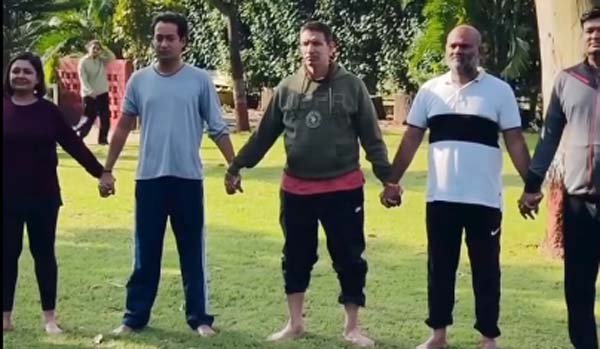
Pachmarhi: On the fifth day of the ongoing organisational training programme in Pachmarhi, the Madhya Pradesh Congress Committee held an in-depth session titled “Caste, Constitution and Politics” for all District Congress Presidents and party legislators. Training session of district presidents was started with Yoga and self defence excercises in morning. The session aimed to provide participants with a comprehensive understanding of how caste continues to influence Indian society and politics, as well as the constitutional framework that guides the pursuit of equality and social justice.
Addressing the gathering, All India Congress Committee member and Jharkhand in-charge K. Raju emphasised that caste is not merely a historical or cultural construct but a lived social reality that shapes access to opportunities, dignity and power. He said that the Indian Constitution laid the foundation for dismantling caste-based discrimination through the principles of equality and equal opportunity. The Congress, he noted, has consistently worked to uphold these constitutional values in governance and social reforms.
Raju further highlighted the relevance of caste census in contemporary policy-making, stating that accurate socio-economic data is essential for ensuring fair distribution of resources and designing welfare measures that genuinely address inequality. He argued that recognising and analysing caste disparities is not divisive but instead strengthens democracy by making it more representative and just.
Speakers at the session underlined that caste, the Constitution and democratic politics are interlinked pillars of India’s societal framework. As long as social and economic inequalities persist, the constitutional promise of justice and equality remains incomplete.
The session witnessed active participation from district presidents, legislators and trainees, who discussed strategies for strengthening the party organisation through inclusive leadership and socially sensitive outreach. Delegates noted that building a socially just society is essential not only for political success but for fulfilling the core ethos of the Indian Republic.