


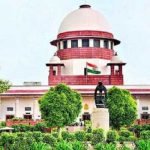

New Delhi, Oct 30 (UNI) The Delhi Police today filed an affidavit in the Supreme Court opposing the bail pleas of activists Umar Khalid, Sharjeel Imam, Gulfisha Fatima and others booked under the Unlawful Activities (Prevention) Act (UAPA) for their alleged role in the conspiracy behind the February 2020 Delhi riots.
The bail pleas of Khalid, Imam, and others are scheduled for hearing tomorrow, before a bench of Justice Aravind Kumar and Justice N.V. Anjaria.
The police alleged that the accused had “conspired to strike at the sovereignty and integrity of the country” through a “regime change operation” disguised as a peaceful protest.
The police argued that the offences involved were of a grave nature, aimed at destabilising the state, and therefore warranted “jail and not bail”.
The affidavit stated that the investigating agency had gathered “ocular, documentary and technical evidence” showing the accused’s “deep-rooted and fervent complicity” in engineering communal violence across the country.
Khalid, Imam, Fatima, and Meeran Haider were booked under the UAPA and the Indian Penal Code for allegedly masterminding the February 2020 riots, which claimed 53 lives and left over 700 injured during protests against the Citizenship (Amendment) Act (CAA) and the National Register of Citizens (NRC).
According to the affidavit, “The conspiracy hatched, nurtured and executed by the petitioners was to strike at the very heart of the sovereignty and integrity of the country by destroying communal harmony and instigating the public towards armed rebellion.”
It further alleged that the accused deliberately sought to ignite communal tensions during the visit of then U.S. President Donald Trump to India, in order to draw international media attention and project the CAA issue globally.
“The materials on record, including chats referencing President Trump, establish beyond doubt that the conspiracy was pre-planned to coincide with his visit, with the intention of portraying India as being engaged in a pogrom against its Muslim community,” the Delhi Police stated.
The affidavit described the CAA as a “radicalising catalyst camouflaged in the name of peaceful protest.”
The police also claimed that the conspiracy was meant to be replicated across India, and that in offences striking at the integrity of the nation, “jail and not bail is the rule.” The affidavit asserted that the allegations against the accused were prima facie true and that they had failed to discharge the onus of proving otherwise.
It further accused the petitioners of intentionally delaying the trial, calling their conduct a “blatant abuse of the process of law.” “The delay in the commencement of trial is solely attributable to the petitioners,” the police said, noting that both the High Court and the Special Court had previously observed that the accused had hindered the framing of charges.
Rejecting the argument that the large number of witnesses would delay the trial, the police clarified that while over 900 witnesses were listed, only about 100–150 were material to proving the offence, and the examination could be completed swiftly if the accused cooperated.
The Supreme Court had earlier, on September 22, sought a response from the Delhi Police on the activists’ pleas challenging the Delhi High Court’s September 2 order denying them bail. The High Court had ruled that “conspiratorial violence under the garb of protests” could not be condoned.
Besides Khalid and Imam, those denied bail include Fatima, Haider, Mohd Saleem Khan, Shifa Ur Rehman, Athar Khan, Abdul Khalid Saifi, and Shadab Ahmed. Another accused, Tasleem Ahmed, was refused bail by a separate bench on the same day.