






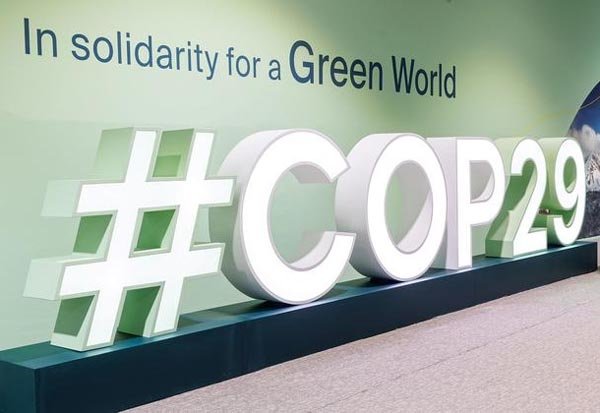
New Delhi, Sep 11 (UNI) India today criticised the global climate finance target of USD 300 billion by 2035 proposed under the UN framework for climate change, calling it inadequate to meet the scale and urgency of the climate crisis.
Delivering the keynote address at FICCI’s 4th LEADS Summit, union Minister for Environment, Forest and Climate Change, Bhupender Yadav asserted that the global South, including India, needs significantly larger support to meet its climate goals.
“Developed countries bear a moral responsibility to support the global South,” the Minister said. “The USD 300 billion target is simply not aligned with the scale of transformation the world needs.” He called for green finance to be seen not as a sectoral intervention but as a pillar of economic and social resilience, particularly for developing nations aiming to pursue inclusive and sustainable development.
Speaking on the theme “Collaborations for Growth in a Transformative World”, Yadav said that green finance must form the backbone of modern economies. Every investment be it in infrastructure, industry or agriculture must deliver not just profits, but sustainability. “Green finance is the backbone of competitive and resilient economies,” he said.
Highlighting India’s path, he noted that under Prime Minister Narendra Modi’s leadership, the country is pursuing growth aligned with ecological balance, backed by ambition, innovation, and community-led action. The Minister cited India’s successful issuance of sovereign green bonds, which have attracted robust international investment as a testament to growing global confidence in India’s green economy.
He noted the role of regulators like the RBI and SEBI in strengthening green finance frameworks, and called for expanding blended finance models that combine public funding with private investment to de-risk climate projects. India, he said, will need over USD10 trillion by 2070 to achieve its Net Zero target, and global climate finance flows must reflect this ambition.
Yadav underscored the importance of operationalising Article 6 of the Paris Agreement, which enables carbon trading through bilateral and multilateral cooperation.
He stated that high-integrity carbon markets, governed by transparency, accountability and rigorous verification, can channel billions into emission reduction efforts, while also facilitating technology transfer to developing countries.
Quoting UNEP Executive Director Inger Andersen, he remarked: “Finance is the make-or-break issue for climate action.” The Minister announced that the Green Credit Programme, introduced in October 2023, has been revised with effect from 29 August 2025 to encourage private sector participation.
The changes aim to incentivise voluntary environmental action through a credible market for green credits and ecological restoration projects. He also stressed the need for innovation in financial instruments—from green bonds and sustainability-linked loans to impact funds—to mainstream green finance.
The Minister emphasised that green finance must benefit MSMEs, farmers and vulnerable communities, not just large corporations or urban centres. He advocated the use of financial technology, digital platforms, and AI-led solutions to democratise access to capital, especially in rural and underserved regions.
“This transition must be inclusive. It is a moral responsibility, not just an economic imperative,” he said.