





By Arti Bali
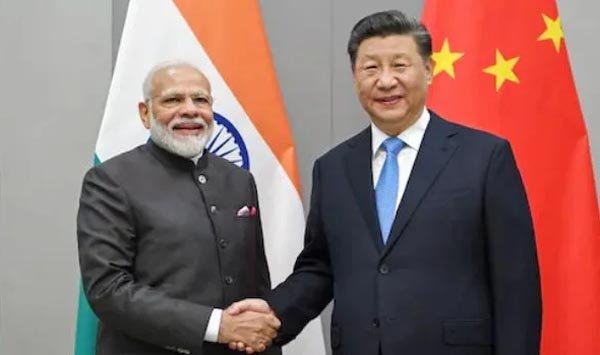
New Delhi, Aug 28 (UNI) Two Asian giants, India and China, are warming up, and the world is watching with curiosity. Prime Minister Narendra Modi’s upcoming visit to Tianjin for the Shanghai Cooperation Organisation (SCO) summit, his first in seven years,is being seen as a potential “gamechanger”.
This comes at a time when US President Donald Trump’s imposition of 50 percent tariff on India has come into effect, prompting New Delhi to inject fresh momentum in its bilateral relations with Beijing. Both Modi and Chinese President Xi Jinping appear to have recalibrated their approaches, recognising the shifting ground realities of a rapidly evolving geopolitical landscape.
India-China relations remain deeply complex, marked by both competition and cooperation. The Galwan clashes had plunged ties to historic lows, but shifting global dynamics are now compelling both nations to reconsider rigid positions. Modi’s SCO visit, coupled with India’s broader global outreach strategy, could create “momentum for a sustainable modus vivendi between Asia’s two giants.”
Former Ambassador Anil Trigunayat called Modi’s upcoming visit “significantly important both bilaterally and in the regional context.” He noted, “India-China relations have witnessed their biggest lows in the past five years, especially since the Galwan crisis. But the changing global dynamic has shifted the leverage since the BRICS summit in Kazan. Now, with high-level visits and frequent interactions, the bilateral context has acquired greater prominence. Even though China will remain a strategic challenge for New Delhi, both sides are seeking a sustainable modus vivendi for mutual benefit.”
Trump’s tariff-heavy foreign policy has fundamentally altered global dynamics. His “America First” approach, driven by the MAGA agenda, disrupted traditional alliances and pushed countries to reassess strategies. Rather than aligning unquestioningly with a superpower for concessions, nations are increasingly pursuing foreign and economic policies rooted in national interest.
India, too, has felt the sting of US protectionism. Trump’s imposition of an additional 25 percent tariff on Indian goods forced New Delhi to rethink its external engagements. Ironically, this setback has opened new space for India and China to explore pragmatic cooperation. While Beijing will remain a long-term strategic challenge, both nations are actively seeking common ground for mutual benefit, Ambassador Trigunayat said.
Washington has accused India of fuelling the Russia-Ukraine war by purchasing Russian crude, even imposing sanctions despite India’s stabilising role in global energy markets and its efforts to promote dialogue between Moscow and Kyiv. Such unilateral pressure underscores Washington’s opportunism, hypocrisy, and neo-colonial mindset, while underestimating India’s civilisational resilience and multi-alignment strategy.
In many ways, Trump’s unilateralism has benefited middle powers by forcing them to diversify trade relations, reduce dependence on Washington, and pursue new opportunities, he said.
For both India and China, the task ahead is not only to manage divergences but also to transform convergences into durable partnerships—anchored in pragmatism, mutual respect, and national interest.
Momentum in India-China ties has been building through a series of high-profile visits. From June 25–27, Defence Minister Rajnath Singh visited China to attend the SCO Defence Ministers’ meeting, marking the first visit by a senior Indian minister since the Galwan clashes of 2020. Singh also held a bilateral meeting with his Chinese counterpart, Dong Jun, in Qingdao. The “constructive and forward-looking exchange of views” led to the resumption of the Kailash Mansarovar Yatra after nearly six years.
Both sides are keen to maintain positive momentum while avoiding fresh complications in the relationship. Modi, who has consistently emphasised economic growth as India’s mission, has long prioritised ties with Beijing. In fact, Xi Jinping was the first foreign leader he hosted after becoming Prime Minister in 2014. Later, Modi hosted Xi for an informal summit in Mamallapuram, Tamil Nadu, in October 2019,the second such meeting after Wuhan in 2018, designed to ease tensions.
Faisal Ahmed, Professor of International Business and Geopolitics at the FORE School of Management, said: “PM Modi’s upcoming visit to Tianjin for the SCO summit is substantiated by both optimism and pragmatism for the SCO and for India-China bilateral ties. Key regional security concerns—such as counterterrorism, intelligence sharing, cyber warfare, and transnational organised crime—must be addressed. At the same time, boosting economic and cultural cooperation through realigning regional value chains, focusing on connectivity corridors, and creating more opportunities for academic and youth exchanges is essential.”
The upcoming Modi-Xi meeting on the sidelines of the SCO summit is expected to inject strategic depth into bilateral ties. At the core lies the goal of reducing the persistent “trust deficit” that has plagued relations. While military and diplomatic negotiations are slowly working toward easing border tensions, progress on this front could pave the way for broader cooperation in economic, cultural, and strategic domains.
“At the India-China bilateral level, the key aim is to diminish the trust deficit and pave the way for convergences rather than divergences. Restoring the ‘informal summit’ mechanism would be vital to deepen candid exchanges between Modi and Xi,” Faisal Ahmed added.
The SCO, too, offers a useful multilateral platform. Security concerns like terrorism, cyber threats, and organised crime demand coordinated responses, while economic and cultural initiatives, trengthening regional value chains, expanding infrastructure connectivity, and promoting youth exchanges.
India, meanwhile, is actively diversifying partnerships across Eurasia, Africa, Asia, and the Global South. Through forums such as BRICS, Quad, FTAs, and bilateral ties with Russia, Japan, China, and Europe, New Delhi is consolidating its global role. Modi’s recent five-nation tour of Africa and the Americas (July 2–9) underlined these ambitions, securing cooperation in critical minerals and rare earths vital for India’s technological future and supply chain resilience.
Current turbulence in India-US ties underscores Washington’s unreliability potentially nudging New Delhi closer to alternative blocs.